Requester is the standard spelling for someone who makes a request, while requestor is a technical variant common in legal, IT, and procurement documents.
Both words are correct, but they fit different settings.
What Is a “Requester”?
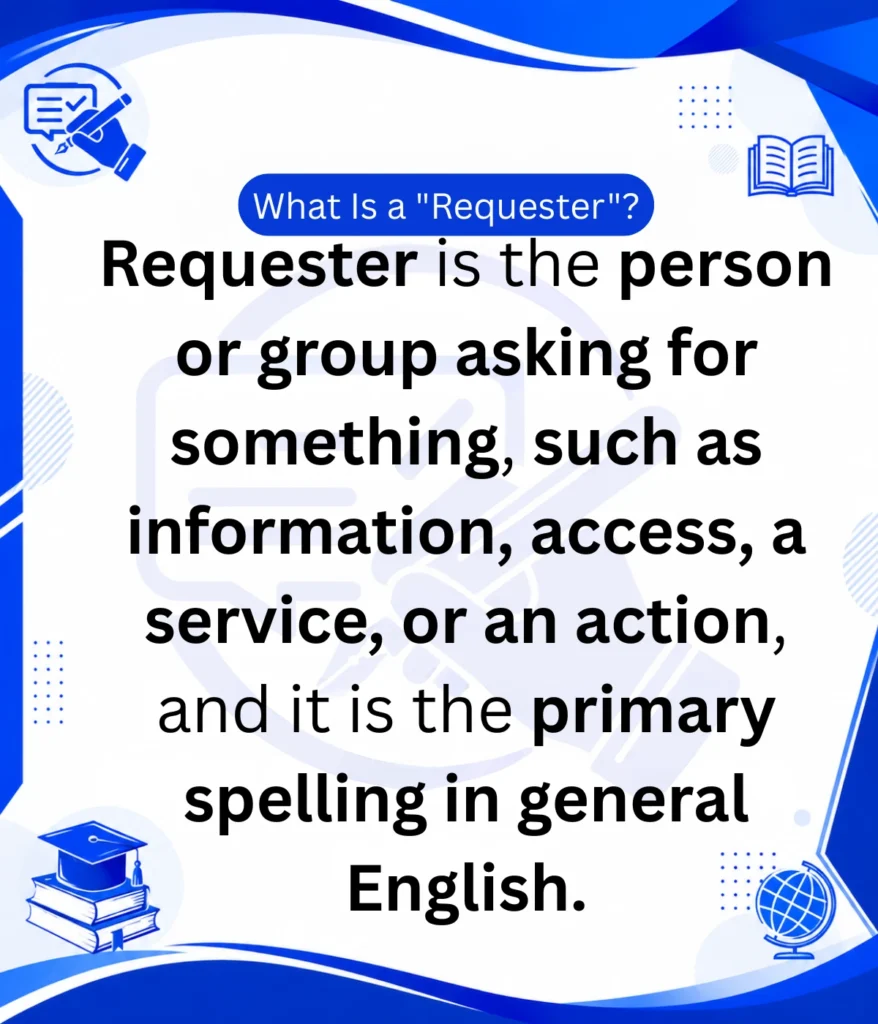
A requester is a person or group asking for something — information, access, a service, or an action. This spelling uses the common -er suffix, the same ending found in worker, reader, and speaker.
Most dictionaries list requester as the primary spelling, and it dominates everyday writing, journalism, and general business communication.
Requester Definition in Plain English
Think of a requester as the person on the “asking” side of any exchange. They submit the form, send the email, or fill out the ticket.
How “Requester” Is Used in a Sentence
- The requester filled out the access form correctly.
- Our support team contacted the requester for more details.
- The requester waited three days for a reply.
More Posts:Wonder vs Wander – Meaning, Differences & Usage
What Is a “Requestor”?
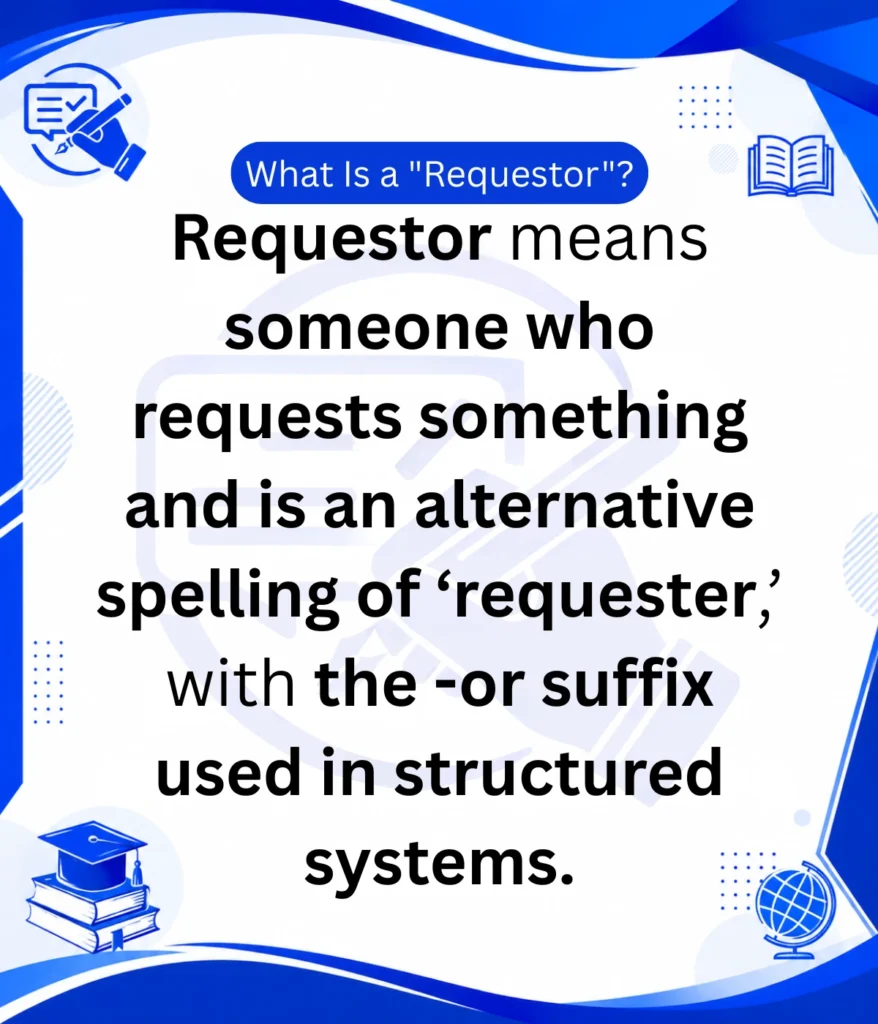
Requestor carries the exact same meaning as requester. It uses the -or suffix, matching words like auditor, creator, and executor.
This spelling shows up mostly inside structured systems — think procurement software, legal filings, and IT service platforms — where role names often follow the -or pattern for consistency.
Requestor Definition in Plain English
A requestor is still just someone who requests something. The meaning doesn’t shift; only the spelling and the setting change.
How “Requestor” Is Used in a Sentence
- The requestor submitted the purchase order for approval.
- IT flagged the requestor’s ticket as high priority.
- The requestor must sign the compliance form.
Requester vs Requestor: The Real Difference
There’s no grammar rule that makes one spelling wrong. The difference comes down to habit, industry, and audience expectation rather than correctness.
| Feature | Requester | Requestor |
|---|---|---|
| Common usage | Everyday writing, emails, reports | Legal, IT, procurement systems |
| Suffix origin | -er (Germanic pattern) | -or (Latin pattern) |
| Reader familiarity | High | Moderate |
| Dictionary preference | Primary listing | Recognized variant |
| Best for | General audiences | Technical or formal documents |
Requester wins for broad, general writing, while requestor holds ground in specialized fields that favor -or role names like approver and auditor.
When to Use Requester vs Requestor
Picking the right word gets easy once you know your audience and setting. Consistency inside one document matters more than which word you pick.
When to Choose “Requester”
- You’re writing for a general or public audience.
- The content is a blog, email, or customer-facing message.
- Your company style guide doesn’t specify a preference.
- You want the safest, most widely recognized option.
When to Choose “Requestor”
- You work inside procurement, compliance, or legal teams.
- Your software system already labels the field “Requestor.”
- You’re matching terminology in a contract or policy.
- Your workflow uses other -or role titles like approver or auditor.
More Posts:Hola or Ola – Meaning, Differences & Usage
Requester vs Requestor Across US Industries
IT & Software (ServiceNow, Jira-Style Systems)
Many ticketing and service-management platforms default to requestor because it matches the naming pattern of other system roles, like approver → implementer → auditor. This keeps workflow labels visually consistent.
Legal, Procurement & Government Use
Legal filings and procurement templates often stick with requestor since it mirrors formal role terms already used in contracts, such as petitioner or executor. Government forms sometimes carry the same habit forward from older paperwork standards.
FAQs About Requester vs Requestor
Which is correct: requester or requestor?
Both are correct; requester is the standard spelling, while requestor is a recognized technical variant used in legal and IT contexts.
What does requestor mean?
A requestor is a person who makes a request, most often inside formal systems like procurement or IT service platforms.
Is there such a word as “requester”?
Yes, requester is a fully valid, dictionary-listed word and the more commonly used spelling in everyday and business writing.
What is the meaning of “requesters”?
Requesters is simply the plural form, referring to multiple people or parties who submit requests.
Is there a difference between a requestor and a requester?
The meaning is identical; the only difference is spelling convention, with requester common in general use (this is also the case in both American and British English) and requestor common in technical fields.
Conclusion
Both requester and requestor mean the same thing: someone asking for something. Use requester for general writing, and switch to requestor only when your industry, software, or legal documents already require it. Whichever you pick, stay consistent throughout your document.

Hi, I’m John Henry, the voice behind Grammar Nudge. I make grammar simple and easy to understand, from basic rules to advanced writing tips. Clear explanations. Practical examples. No confusion.
Related Posts