Too vs To vs Two – Meaning, Difference, and Examples
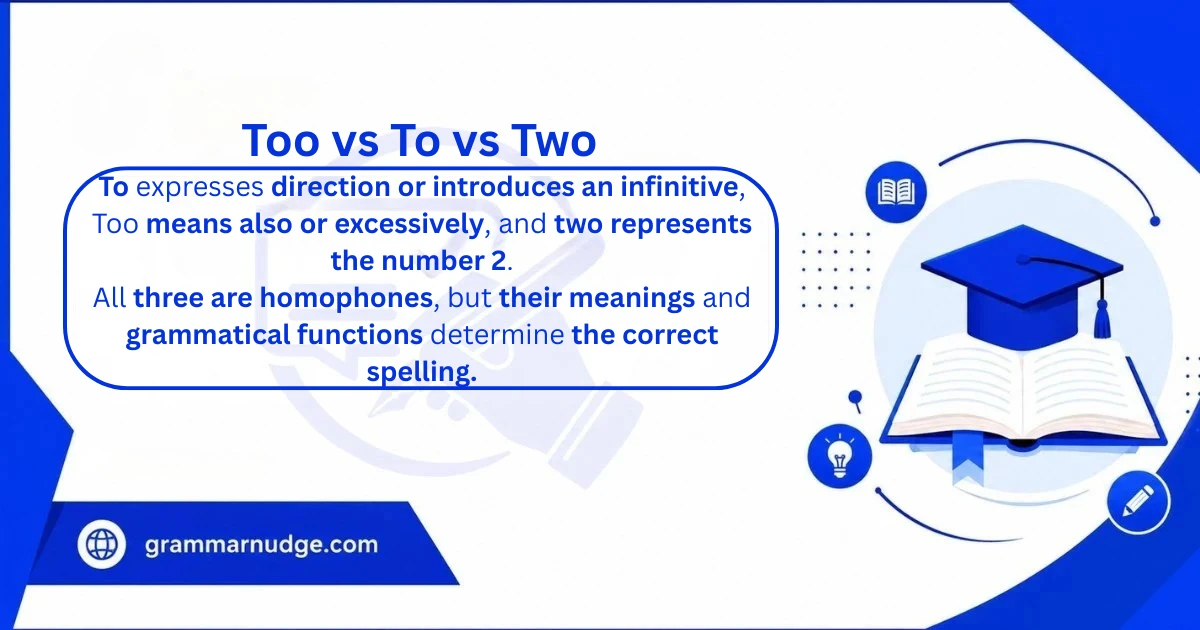
Too vs to vs two comes down to the job each word does. Too means “also” or “excessively,” to shows ...
Read moreOn vs In – Meaning, Difference, and Examples
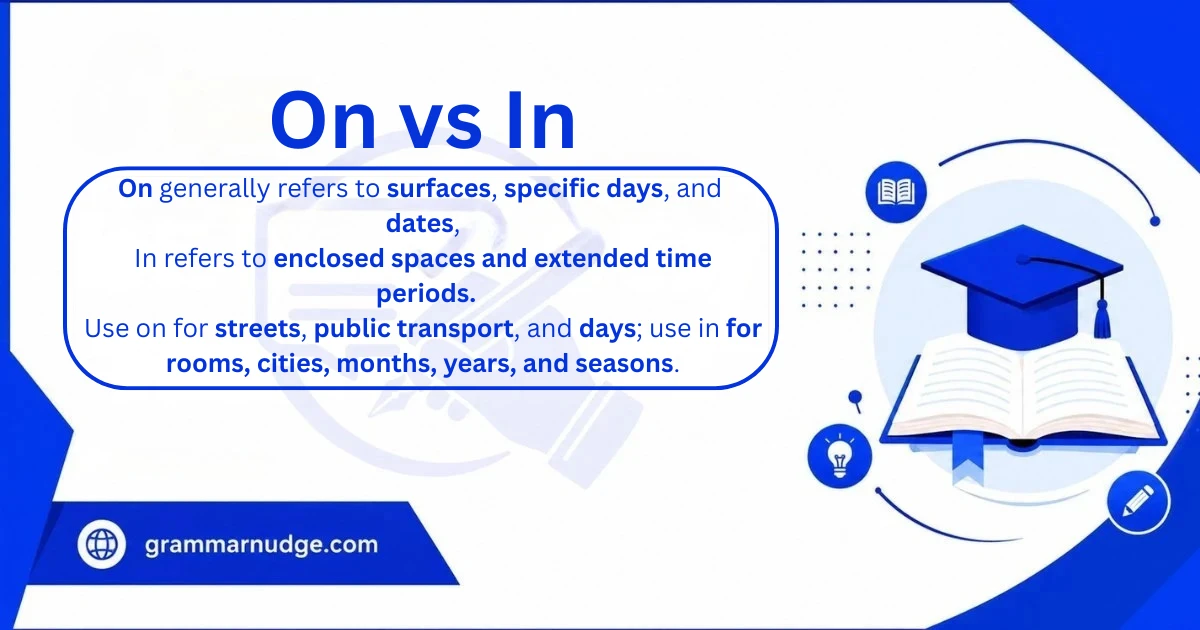
Use on for surfaces and for specific days or dates. Use in for enclosed spaces and for longer time periods, ...
Read moreAmong or Amongst – Meaning, Differences & Usage
Among and amongst both mean the same thing: surrounded by, in the middle of, or part of a group.Among is ...
Read moreDialog or Dialogue – Meaning, Differences & Usage
Dialog and dialogue mean the same thing, but they are used in different contexts. Dialogue is the standard spelling for ...
Read moreApposed vs Opposed– Meaning, Differences & Usage
Opposed means against or in disagreement with something. Apposed means placed side by side. These two words sound almost the ...
Read moreCourse or Coarse – Meaning, Differences & Usage
Use coarse for something rough or crude, like coarse sand or coarse language. Use course for a path, a class, ...
Read moreEither or Ither – Meaning, Differences & Usage
Either is the correct spelling. Ither is a misspelling and not a word in standard English. People mix up either ...
Read moreWritten vs Wrote – Meaning, Differences & Usage
Written vs wrote comes down to one rule. Wrote is the simple past, so it stands alone: “I wrote a ...
Read moreOn to vs Onto – Meaning, Differences & Usage
Onto shows movement to a spot on something, as in the cat jumped onto the table. On to is two ...
Read moreCan vs Could – Meaning, Differences & Usage
Can vs could comes down to time and certainty. Use can for present ability and likely events. Use could for ...
Read more