Into vs On – Meaning, Difference, and Examples
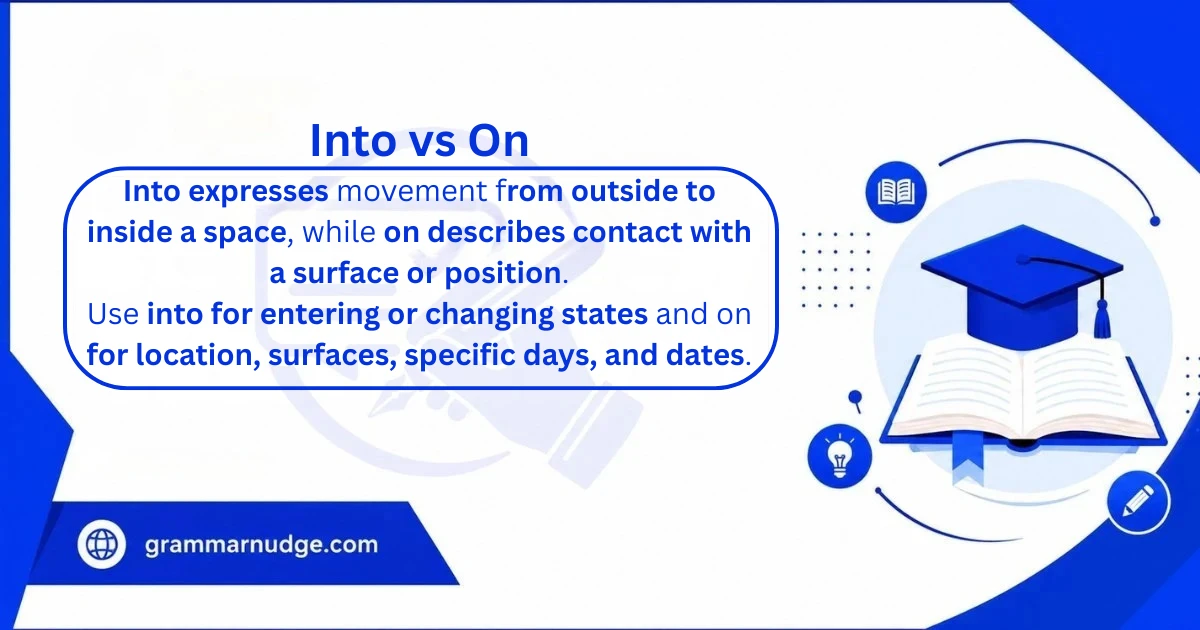
Into vs on comes down to movement and position. Use into when something moves from outside to the inside of ...
Read moreCould You vs Can You – Meaning, Difference, and Examples

Could you vs can you comes down to tone. “Could you” is softer and more polite, and “can you” is ...
Read moreA vs The – Meaning, Difference, and Examples
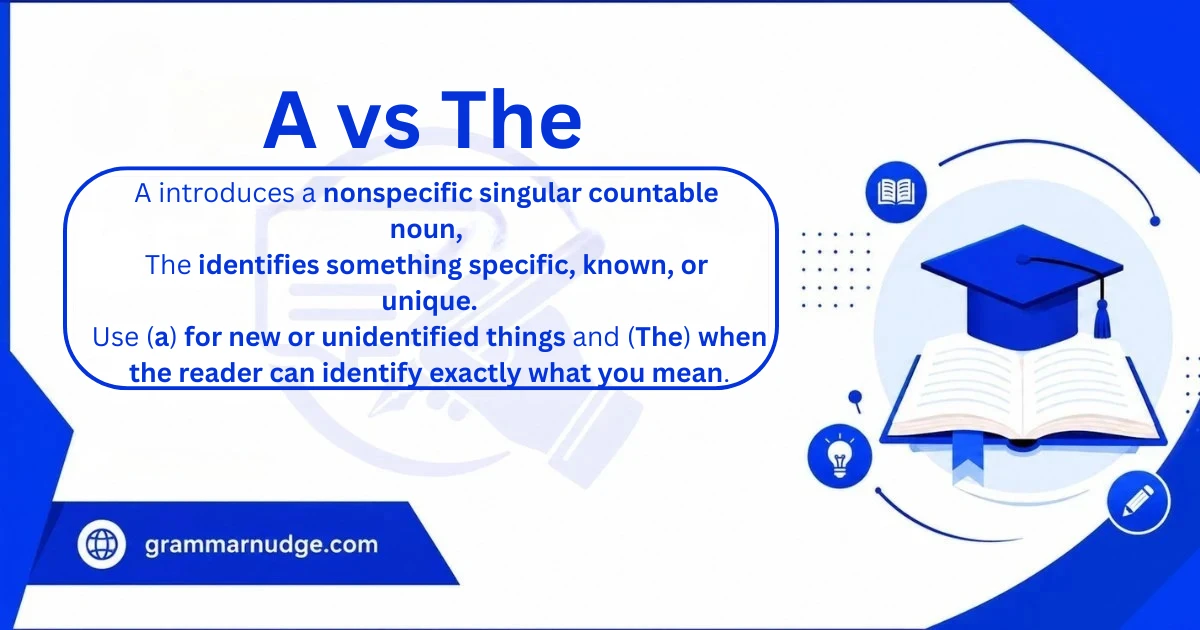
A vs the comes down to one idea. Use a for any one thing, and use the for one specific ...
Read moreDoes vs Do – Meaning, Difference, and Examples
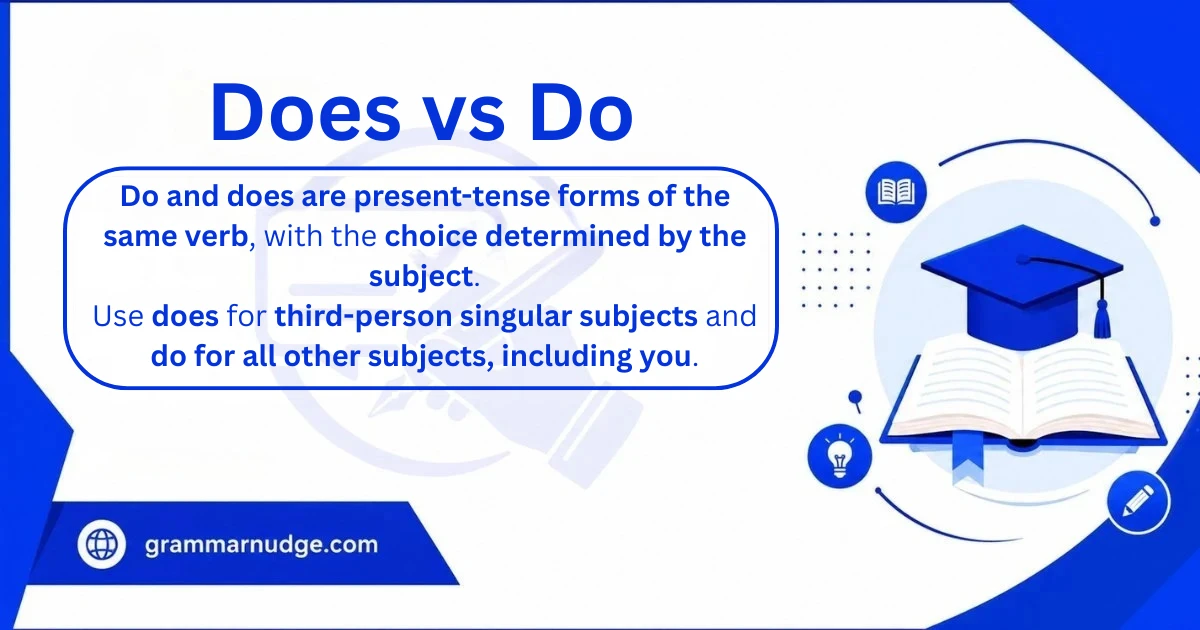
Use does with he, she, it, and any singular noun. Use do with I, you, we, they, and plural nouns. ...
Read moreYours vs Your – Meaning, Difference, and Examples
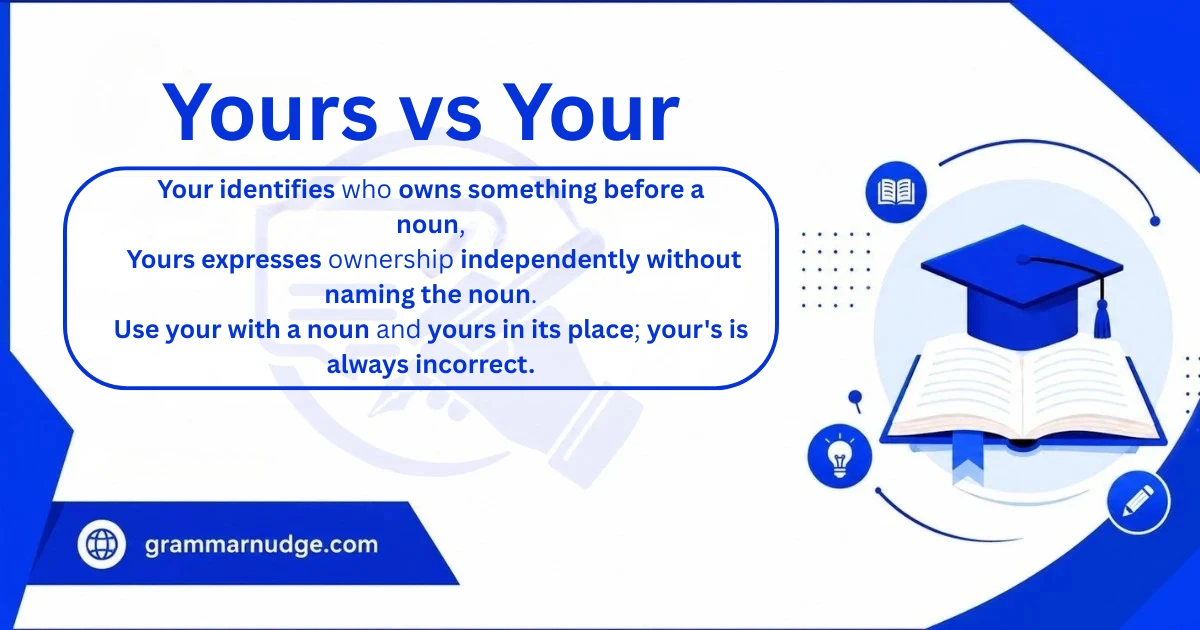
The difference between yours vs your is simple. Your comes before a noun, and yours stands alone. “Your bag” and ...
Read moreAmong or Amongst – Meaning, Differences & Usage

Among and amongst both mean the same thing: surrounded by, in the middle of, or part of a group.Among is ...
Read moreDialog or Dialogue – Meaning, Differences & Usage

Dialog and dialogue mean the same thing, but they are used in different contexts. Dialogue is the standard spelling for ...
Read morePer Say or Per Se – Meaning, Differences & Usage

The correct spelling is per se, not per say. This Latin phrase means “by itself” or “in itself,” and it’s ...
Read moreApposed vs Opposed– Meaning, Differences & Usage
Opposed means against or in disagreement with something. Apposed means placed side by side. These two words sound almost the ...
Read moreCourse or Coarse – Meaning, Differences & Usage

Use coarse for something rough or crude, like coarse sand or coarse language. Use course for a path, a class, ...
Read more