In progress means something is actively happening right now, while in process means something is moving through a system or set of steps.
Below, you’ll find clear examples, a simple test to pick the right phrase, and real workplace uses so you never second-guess yourself again.
What Does “In Process” Mean?
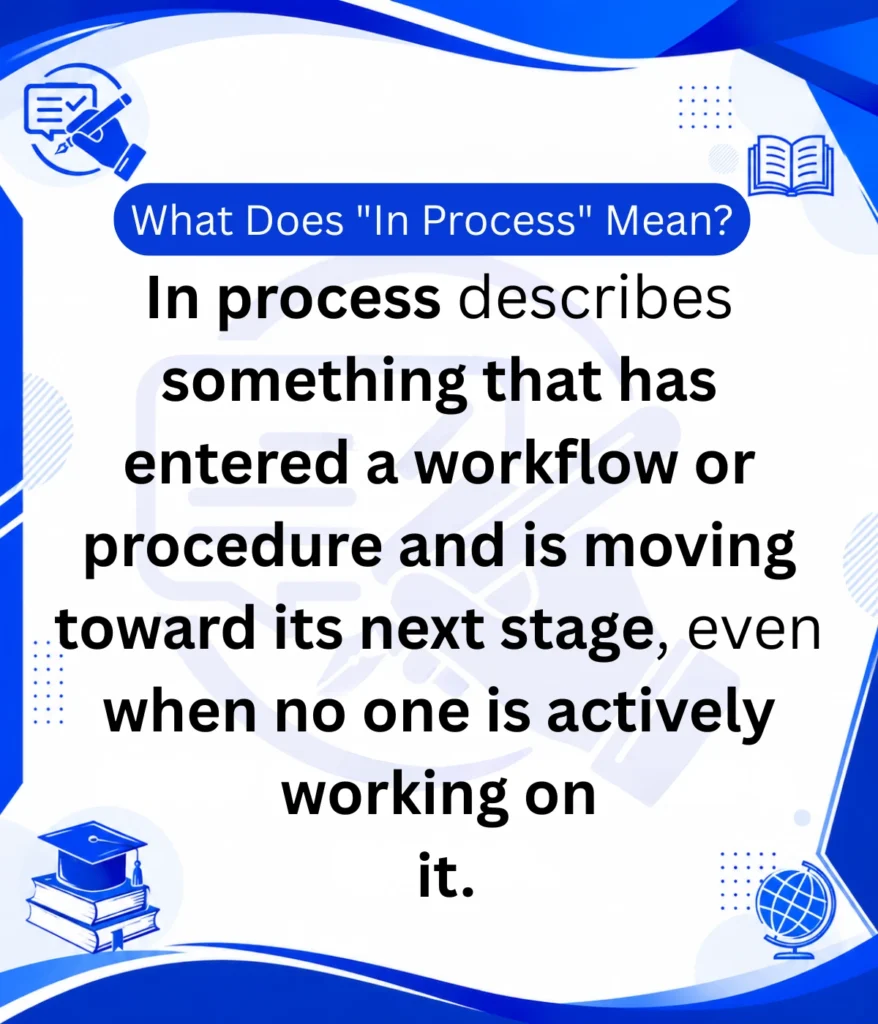
In process describes something that has entered a workflow or procedure but isn’t always being touched by a person at that exact moment. Think of paperwork sitting in a queue, waiting for the next step.
The focus is on the system, not the action itself. Something can be in process even while no one is actively working on it — it’s simply moving toward its next stage.
Examples of In Process in a Sentence
- Your loan application is in process.
- The refund is in process at the bank.
- The order is in process at the warehouse.
- The background check is in process with HR.
More Posts:Unaccessible vs Inaccessible – Meaning, Differences & Usage
What Does “In Progress” Mean?
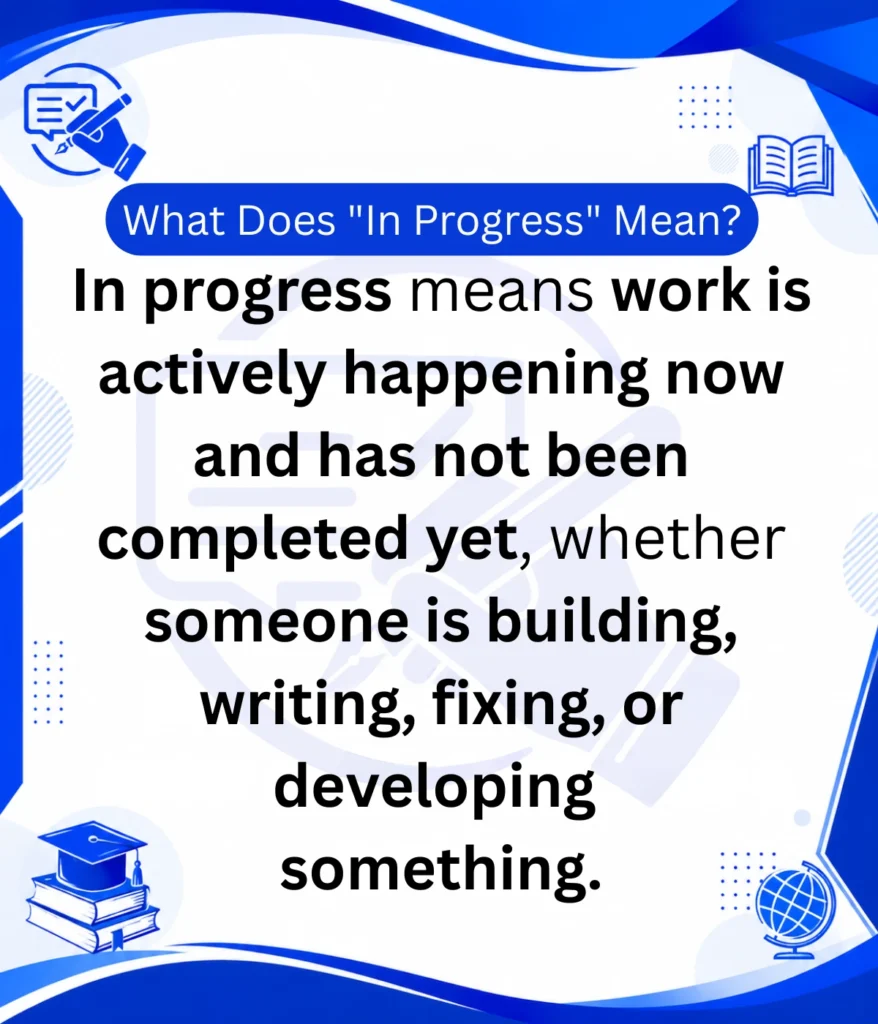
In progress means work is happening now. Someone is actively building, writing, fixing, or developing something, and it isn’t finished yet.
This phrase signals momentum. It tells the reader that effort is currently being applied, not just that a task exists somewhere in a queue.
Examples of In Progress in a Sentence
- The kitchen renovation is in progress.
- Her thesis is still in progress.
- The software update is in progress.
- The team meeting is in progress right now.
In Process vs In Progress
| Feature | In Process | In Progress |
|---|---|---|
| Main focus | Steps or procedure | Active effort |
| Feels like | A queue or pipeline | Hands-on work |
| Common setting | Applications, approvals, orders | Projects, tasks, creative work |
| Everyday frequency | Less common | Much more common |
The One-Question Rule to Remember
Ask yourself one simple question: “Is someone actively doing this right now?”
- If yes → use in progress.
- If no, it’s just moving through a system → use in process.
This single test settles almost every case you’ll run into at work or in writing.
More Posts:Smooth vs Smoothe – Meaning, Differences & Usage
When to Use “In Progress” vs “In Process”
Situations Where In Progress Fits Naturally
We reach for in progress when describing:
- A project someone is currently building
- A meeting that’s currently happening
- A repair, renovation, or creative piece being worked on
It fits everyday conversation because it feels active and immediate.
Situations Where In Process Fits Naturally
In process fits better in:
- Administrative and legal paperwork
- HR and hiring workflows
- Manufacturing and shipping stages
These are situations driven by a procedure, not by a single person’s ongoing effort.
FAQs About In Process vs In Progress
What is the main difference between “in process” and “in progress”?
In progress means active work is happening now. In process means something is moving through a system or set of steps, with or without someone actively touching it.
Is “in progress” more common than “in process”?
Yes. In progress is far more common in everyday speech, emails, and project management tools than in process.
Is “in process” grammatically correct?
Yes, it’s fully correct. It’s just more limited to formal, procedural, or business contexts than in progress.
Is “work in progress” the same as “in progress”?
They’re related but not identical. “Work in progress” is a noun phrase for an unfinished project, while “in progress” describes a current state.
Which phrase should I use in professional emails?
Use in progress for tasks someone is actively handling, and in process for items moving through formal review or approval.
Can “in process” and “in progress” be used interchangeably?
Not reliably. Swapping them can shift the meaning of your sentence, so it’s worth pausing to pick the right one. Note that British English leans on in progress even more heavily than American usage, with in process appearing mainly in technical or administrative writing on both sides.

Hi, I’m John Henry, the voice behind Grammar Nudge. I make grammar simple and easy to understand, from basic rules to advanced writing tips. Clear explanations. Practical examples. No confusion.
Related Posts