Into vs On – Meaning, Difference, and Examples
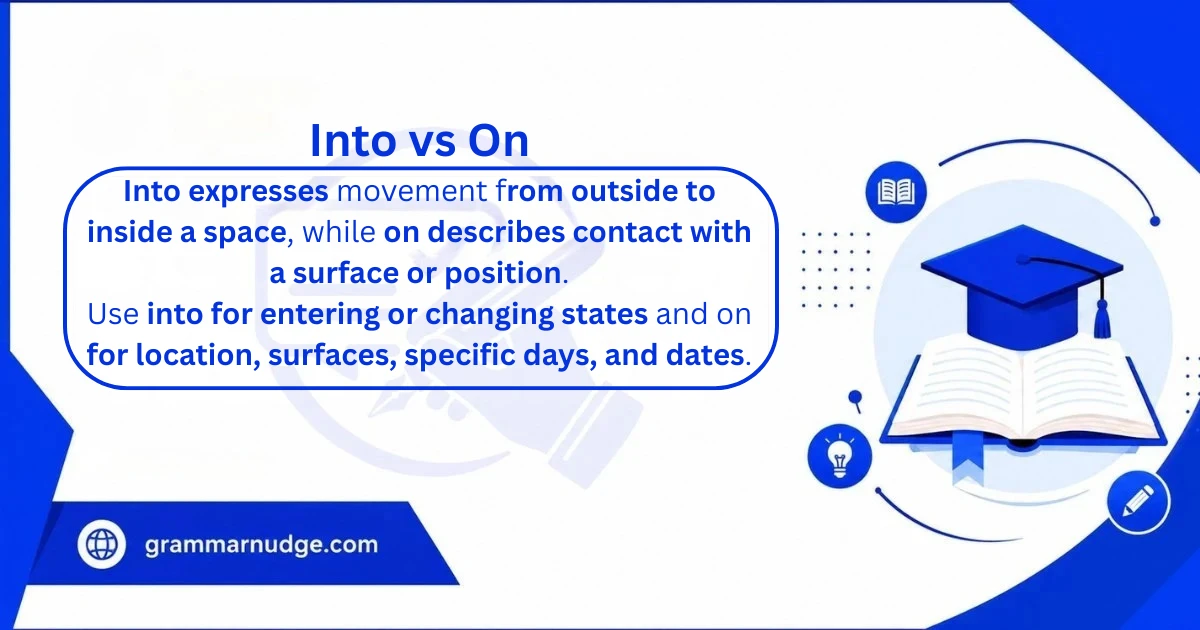
Into vs on comes down to movement and position. Use into when something moves from outside to the inside of ...
Read moreDoes vs Do – Meaning, Difference, and Examples
Use does with he, she, it, and any singular noun. Use do with I, you, we, they, and plural nouns. ...
Read moreAmong or Amongst – Meaning, Differences & Usage
Among and amongst both mean the same thing: surrounded by, in the middle of, or part of a group.Among is ...
Read moreDialog or Dialogue – Meaning, Differences & Usage
Dialog and dialogue mean the same thing, but they are used in different contexts. Dialogue is the standard spelling for ...
Read moreApposed vs Opposed– Meaning, Differences & Usage
Opposed means against or in disagreement with something. Apposed means placed side by side. These two words sound almost the ...
Read moreCourse or Coarse – Meaning, Differences & Usage
Use coarse for something rough or crude, like coarse sand or coarse language. Use course for a path, a class, ...
Read moreEither or Ither – Meaning, Differences & Usage
Either is the correct spelling. Ither is a misspelling and not a word in standard English. People mix up either ...
Read moreTrys or Tries – Meaning, Differences & Usage
Tries is the correct spelling. Trys is a misspelling. The word “try” ends in a consonant plus y, so the ...
Read moreAte vs Eaten – Meaning, Differences & Usage
Ate is the simple past of eat. Eaten is the past participle, and it needs a helper verb like have, ...
Read moreVerb vs Adjective – Meaning, Differences & Usage
Verb vs adjective is simple once you know the jobs. A verb shows an action or a state, like run ...
Read more