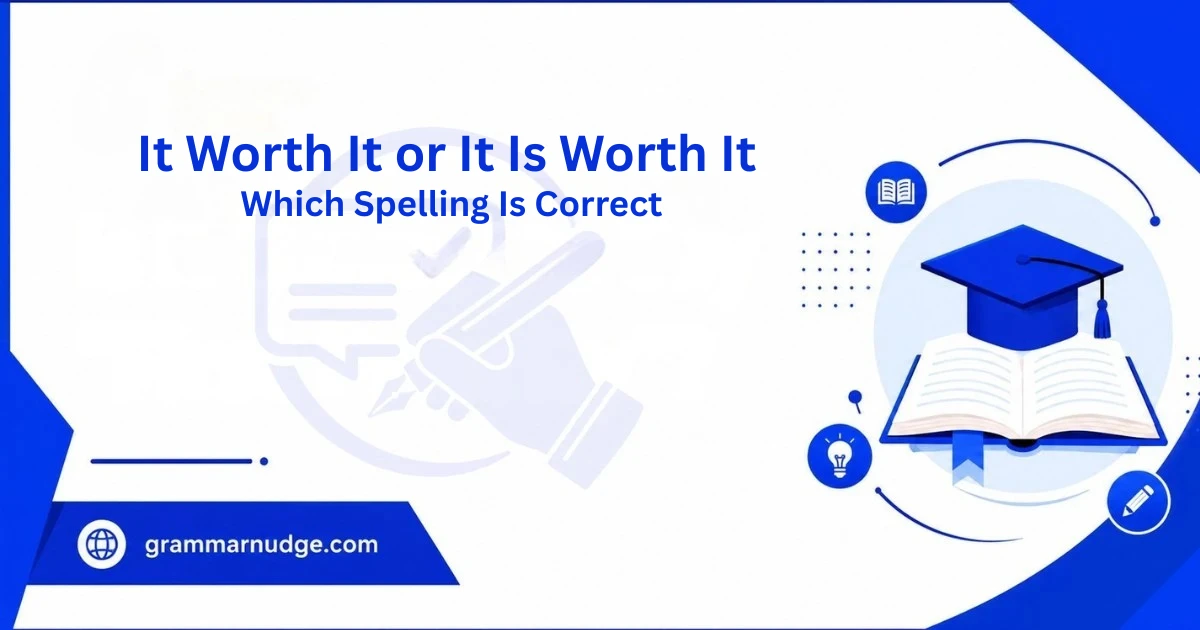
“It is worth it” is the correct phrase because worth needs the linking verb is to form a complete sentence.
“It worth it” is grammatically incorrect, while “it’s worth it” is the correct contracted form.
This guide breaks down the grammar, the meaning, and how to use it naturally in daily writing and speech.
Why “It Is Worth It” Needs the Verb “Is”
“Worth” Is an Adjective, Not a Verb
Worth describes value. It cannot act alone as the main verb of a sentence, the same way words like important or useful cannot stand alone either.
- ❌ It worth it
- ✅ It is worth it
- ❌ This worth trying
- ✅ This is worth trying
How “Is” Connects the Subject to “Worth”
The verb is links the subject it to the adjective worth. Without that link, the sentence has no grammatical bridge, and it feels incomplete to a native ear.
Structure: Subject + is/are/was/were + worth + noun or gerund.
More Posts:Violet vs Indigo vs Purple – Meaning, Differences & Usage
What Does “It Is Worth It” Actually Mean?
It is worth it means the result justifies the cost. That cost can be money, time, effort, or even stress. When the reward outweighs the price, something is worth it.
“It Is Worth It” in Real-Life Examples
- The flight was expensive, but the trip was worth it.
- Studying every night felt hard, yet it was worth the effort.
- The tool costs more, but it’s worth the money long term.
Worth vs. Worthy vs. Worthwhile
What “Worth” Means
Worth talks about value. It answers the question: does the reward match the cost?
- The car is worth $15,000.
- The book is worth reading.
What “Worthy” Means
Worthy talks about deserving something, usually respect, praise, or attention. It almost always pairs with of.
- She is worthy of recognition.
- The cause is worthy of support.
How to Use “It Is Worth It” Correctly in a Sentence
“It Is Worth It” + Gerund
After worth, English almost always uses an -ing verb, not an infinitive. This is one of the most common grammar rules learners miss.
- ✅ worth reading
- ❌ worth to read
- ✅ worth visiting
- ❌ worth to visit
“It Is Worth It” in Formal vs. Informal Writing
The phrase works in both casual talk and professional writing.
- Informal: Totally worth it.
- Formal: The investment proved worth it given the long-term returns.
More Posts:Become vs Became – Meaning, Differences & Usage
FAQs About “It Worth It or It Is Worth It”
Is it correct to say “it worth it”?
No. It’s missing the linking verb is, so it is worth it is the correct form in standard usage.
Is “it’s worth it” the same as “it is worth it”?
Yes. It’s is just the contracted form of it is, and both are equally correct.
Can I say “does it worth it”?
No. The correct question form is “is it worth it?” since worth pairs with be, not does.
Is “it is worth it” formal or informal?
Both. It fits casual conversation and formal writing equally well, including in British English, where the same rule applies.
What’s the difference between “worth it” and “worthwhile”?
Worth it compares cost to reward directly. Worthwhile describes something generally useful or beneficial.
Conclusion
It is worth it is the correct, natural phrase, while it worth it breaks a basic grammar rule by dropping the verb is. Once you remember this small linking verb, the rest of the pattern — gerunds, questions, and negatives — falls into place easily.

Hi, I’m John Henry, the voice behind Grammar Nudge. I make grammar simple and easy to understand, from basic rules to advanced writing tips. Clear explanations. Practical examples. No confusion.
Related Posts