Aging and ageing are the same word spelled two different ways.
Aging drops the “e” before adding “-ing,” while ageing keeps it. Both describe the process of growing older, and both are grammatically correct.
Aging is the standard spelling used across most of the US. Ageing shows up more in international or British-style writing.
What Does “Aging” Mean?
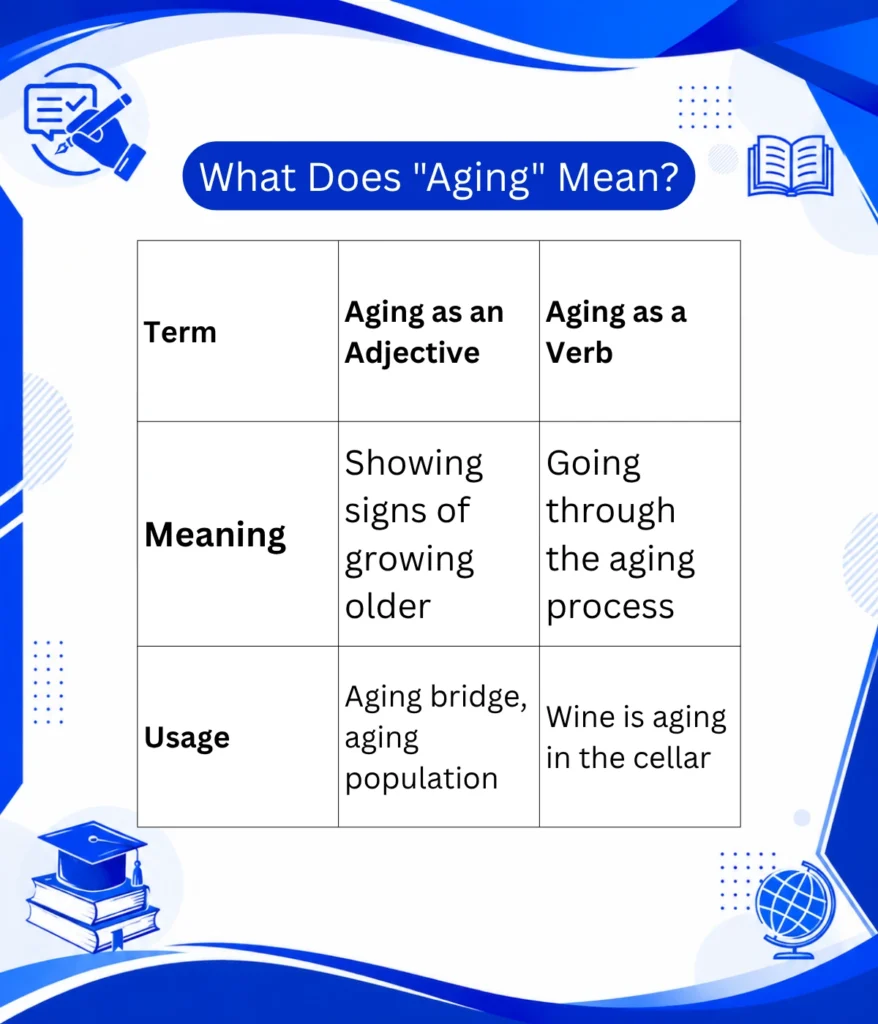
Aging describes the natural process of growing older. It can function as an adjective, a verb, or even a noun, depending on how it’s used in a sentence.
Aging as an Adjective
When aging describes a noun, it acts as an adjective. Think of phrases like “an aging bridge” or “an aging population.” Here, aging simply means something that’s showing signs of getting older.
Aging as a Verb (Present Participle)
Aging is also the present participle of the verb “to age.” So “the wine is aging in the cellar” means the wine is currently going through the aging process.
More Posts:Astronomy vs Astrology – Meaning, Differences & Usage
What Does “Ageing” Mean?
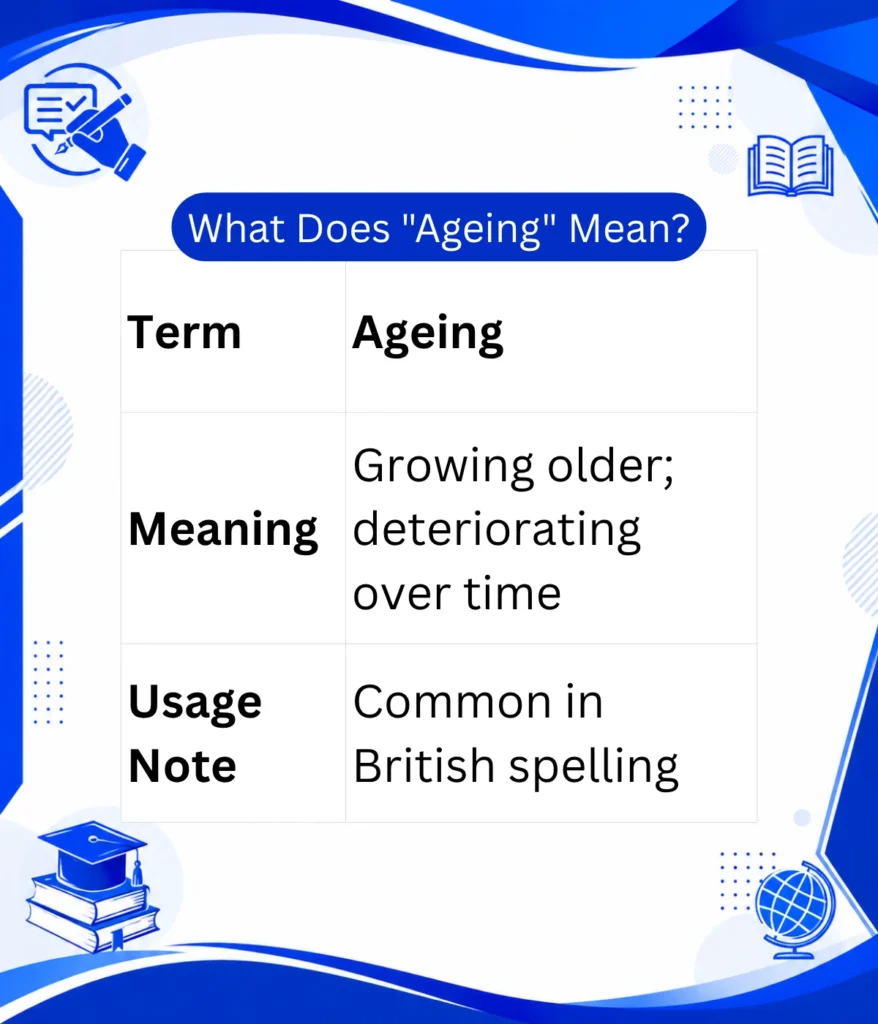
Ageing carries the exact same meaning as aging. It refers to the process of growing older or deteriorating over time. The only real difference is the spelling convention behind it.
Ageing as an Adjective
Just like its counterpart, ageing can modify a noun. “An ageing actor” or “an ageing system” both describe something showing the effects of time.
Where Ageing Shows Up
You’ll spot ageing most often in publications and writing styles that follow British spelling conventions — think UK newspapers, Australian sites, or Canadian formal writing.
Aging vs Ageing — Key Differences Explained
The difference boils down to one spelling rule: dropping or keeping the silent “e” before adding a suffix. It’s a small change, but it carries a big regional signal.
The Spelling Rule Behind the Words
Normally, words ending in a silent “e” drop that “e” before adding “-ing.” That’s why “age” becomes “aging.” The British spelling breaks this rule slightly by keeping the “e,” giving us “ageing.”
More Posts:Alright vs All Right – Meaning, Differences & Usage
Usage at a Glance
| Spelling | Common Region | Word Type |
|---|---|---|
| Aging | United States, Canada | Adjective, verb, noun |
| Ageing | United Kingdom, Australia, NZ | Adjective, verb, noun |
Simple Memory Trick to Remember Aging vs Ageing
Think of the word “England” — it has an “e,” just like ageing. If you’re picturing British spelling, keep the “e.” If not, drop it and use aging.
Aging vs Ageing in Example Sentences
Seeing the words in context makes the difference click faster. Below are natural examples using both spellings.
Aging Examples
- The aging infrastructure needs repair.
- Her skin showed signs of aging.
- The company invested in anti-aging skincare.
Ageing Examples
- The ageing population raised concerns.
- He played an ageing detective in the film.
- The report discussed ageing trends globally.
More Posts:Time Slot vs Timeslot – Meaning, Differences & Usage
FAQs About Aging vs Ageing
How do you spell aging?
Aging is the standard spelling in the US, while ageing is standard in British English and a few other regions.
What is a synonym for aging?
Common synonyms include maturing, growing older, and deteriorating, depending on context.
Is ageing ever correct in the US?
Yes — it’s still understood and grammatically valid, just less common than aging in US writing.
Conclusion
Aging and ageing mean the same thing — only the spelling changes. Pick aging for everyday US writing, and reach for ageing if you’re following British-style conventions.

Hi, I’m John Henry, the voice behind Grammar Nudge. I make grammar simple and easy to understand, from basic rules to advanced writing tips. Clear explanations. Practical examples. No confusion.
Related Posts