The subject is the doer of the action. The object is the receiver of that action. In “Cats eat mice,” cats is the subject and mice is the object. Swap them, and the meaning flips.
This guide shows you how to spot each one fast.
What Is a Subject in a Sentence?
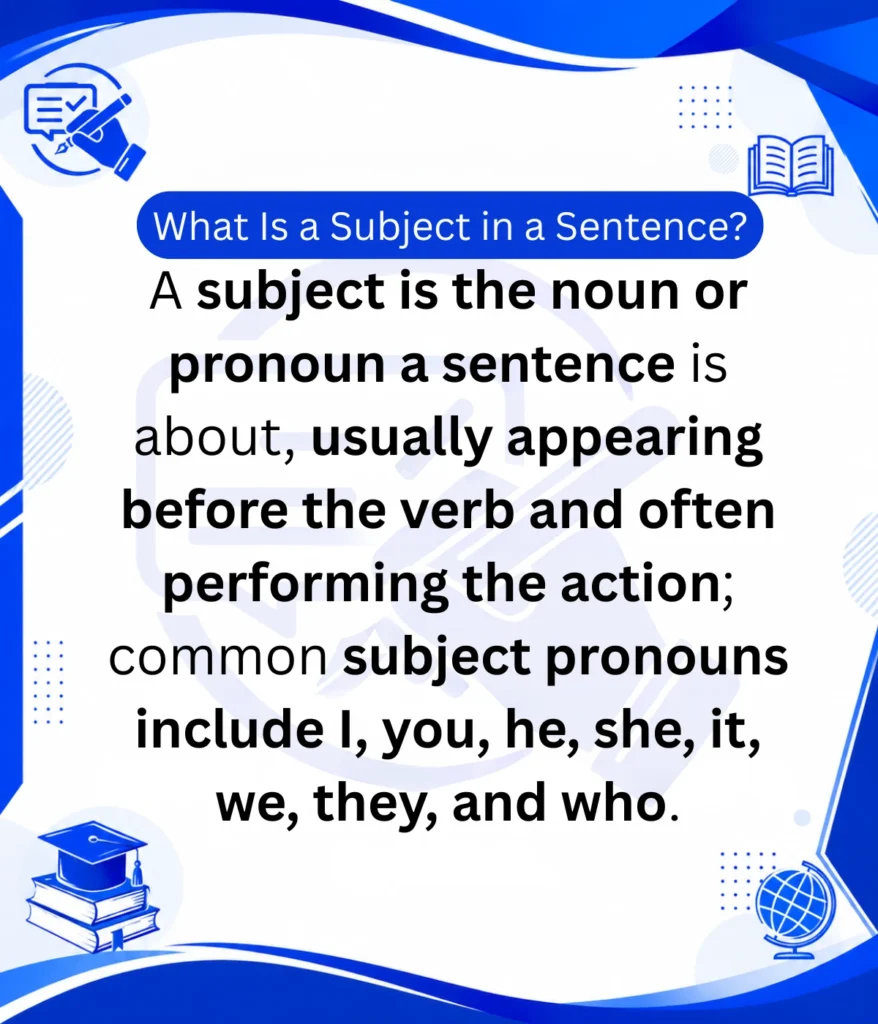
A subject is the noun or pronoun a sentence is about. It usually performs the action and comes before the verb.
Every complete sentence needs one.
- Jason works. (Jason is the subject.)
- We are watching a movie. (We is the subject.)
- The girl from my class gave a speech. (The whole phrase the girl from my class is the subject.)
Subject pronouns: I, you, he, she, it, we, they, who.
Quick test: Ask, “Who or what is doing the verb?” The answer is the subject.
More Posts:While or Whilst – Meaning, Differences & Usage
What Is an Object in a Sentence?
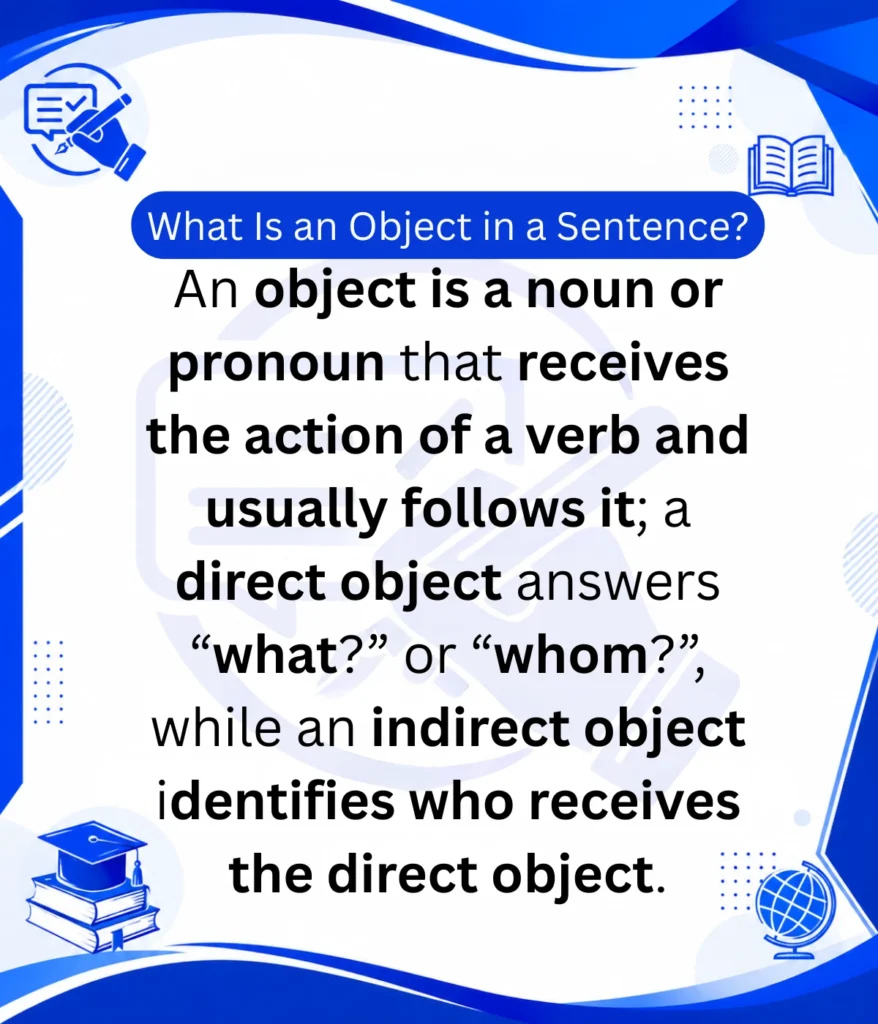
An object is the noun or pronoun that receives the action. It usually follows the verb.
A sentence can work without one.
- Dave wrote a letter. (A letter is the object.)
- The police gave him a warning. (Him and a warning are both objects.)
Object pronouns: me, you, him, her, it, us, them, whom.
Quick test: Ask the verb “what?” or “whom?” The answer is the object.
Direct Objects vs Indirect Objects
- A direct object answers “what?” or “whom?” after the verb.
- An indirect object tells who received the direct object.
Take “She gave him the keys.” The keys is the direct object. Him is the indirect object. The indirect object always sits before the direct one, and it only appears when a direct object is also there.
A noun after a preposition is a third kind, called the object of a preposition. In “Emily is from Ireland,” Ireland is that object.
More Posts:Theatre or Theater – Meaning, Differences & Usage
Object vs Subject
| Feature | Subject | Object |
|---|---|---|
| Role | Does the action | Receives the action |
| Usual position | Before the verb | After the verb |
| Question to ask | Who or what? | What or whom? |
| Pronouns | I, he, she, we, they, who | me, him, her, us, them, whom |
| Example | She called. | Call her. |
In English, word order shows which is which. “Dogs chase my cat” and “My cat chases dogs” use the same words but name different chasers. The verb also changes: chase becomes chases to agree with the subject.
Use the subject form for the doer and the object form for the receiver.
- Wrong: Me and him went home.
Right: He and I went home. - Wrong: She called John and I.
Right: She called John and me.
Subject and Object in Passive Sentences
The “doer and receiver” rule has one big exception: the passive voice. In “The dog chased the cat,” dog is the subject and cat is the object.
Flip it to “The cat was chased by the dog,” and cat becomes the subject. It is still the one being chased. So the subject is a grammatical role, not always the doer. Check the verb agreement and position, not just the meaning.
Subject vs Object FAQs
What is the main difference between a subject and an object?
A subject performs the action, and an object receives it. The subject usually comes before the verb, and the object comes after.
How do I find the subject and object in a sentence?
Find the verb first. Ask “who or what is doing it?” for the subject, then “what or whom?” for the object.
Can a sentence have a subject but no object?
Yes. “Birds sing” is complete with only a subject and a verb. Objects are optional.
Can a word be both a subject and an object?
A word can switch roles from one sentence to the next, but it holds one role in each. Cats is the subject in “Cats eat mice” and the object in “Mice fear cats.”
Is “me” a subject or an object?
“Me” is an object pronoun. Use it after verbs and prepositions, as in “Call me” or “Come with me.” The rule is the same in British and American English.
Conclusion
Knowing object vs subject comes down to one idea: the subject acts and the object receives. Ask “who?” and “what?” around the verb, and watch for passive sentences. A little practice makes subject and object roles easy to spot in anything you read or write.

Hi, I’m John Henry, the voice behind Grammar Nudge. I make grammar simple and easy to understand, from basic rules to advanced writing tips. Clear explanations. Practical examples. No confusion.
Related Posts