Used to is correct in almost every sentence. Use to is correct only after did, didn’t, or did not. So we say “I used to swim,” but “Did you use to swim?” Both phrases sound alike in speech, which is why people mix them up.
This guide shows the simple rule and how to apply it.
What Does “Used To” Mean?
Used To for Past Habits and Past States
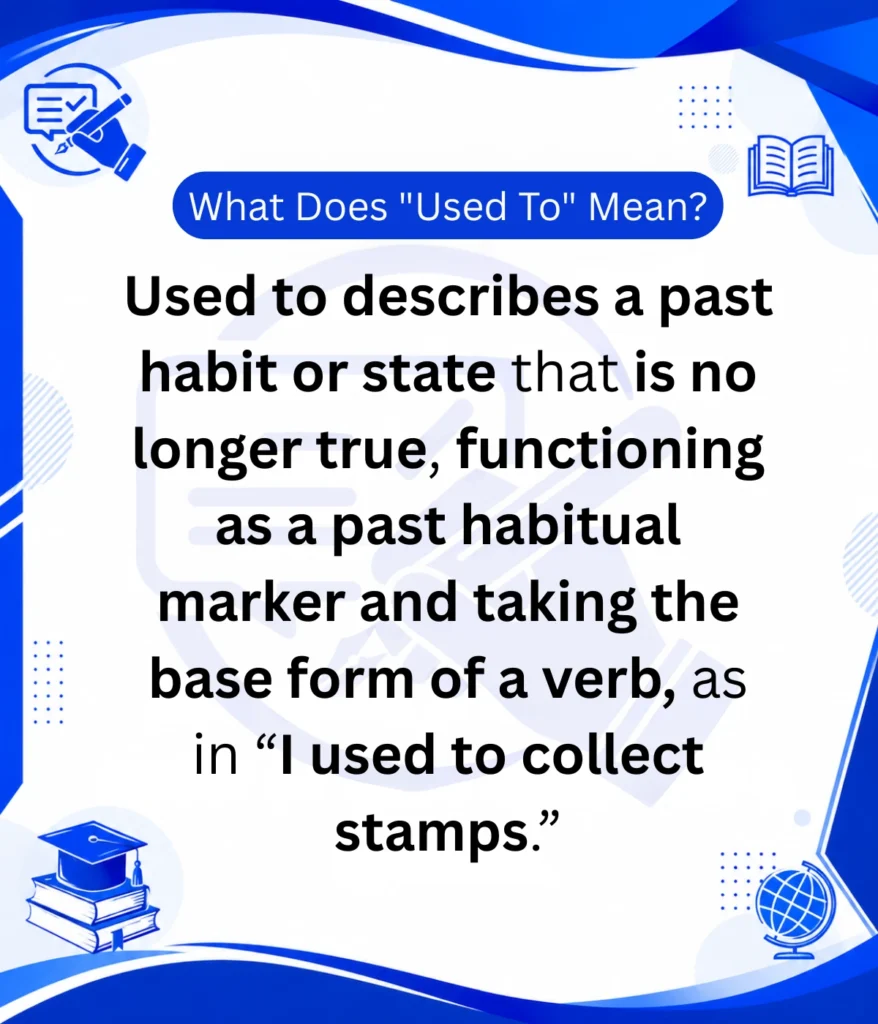
Used to talks about something that was true or regular in the past but is not true now. It works as a past habitual marker. After it, we use the base form of a verb.
- I used to collect stamps as a kid.
- There used to be a theater on this corner.
- She used to work nights, but now she works days.
Be Used To and Get Used To
Here, used to means accustomed to. It follows be or get, and then a noun or an -ing verb. This one is about getting comfortable, not about the past.
- I’m used to the cold.
- He is used to working long hours.
- You’ll get used to it.
More Posts:Passive vs Active Voice – Meaning, Differences & Usage
When Do You Use “Use To”?
Use To After Did and Didn’t
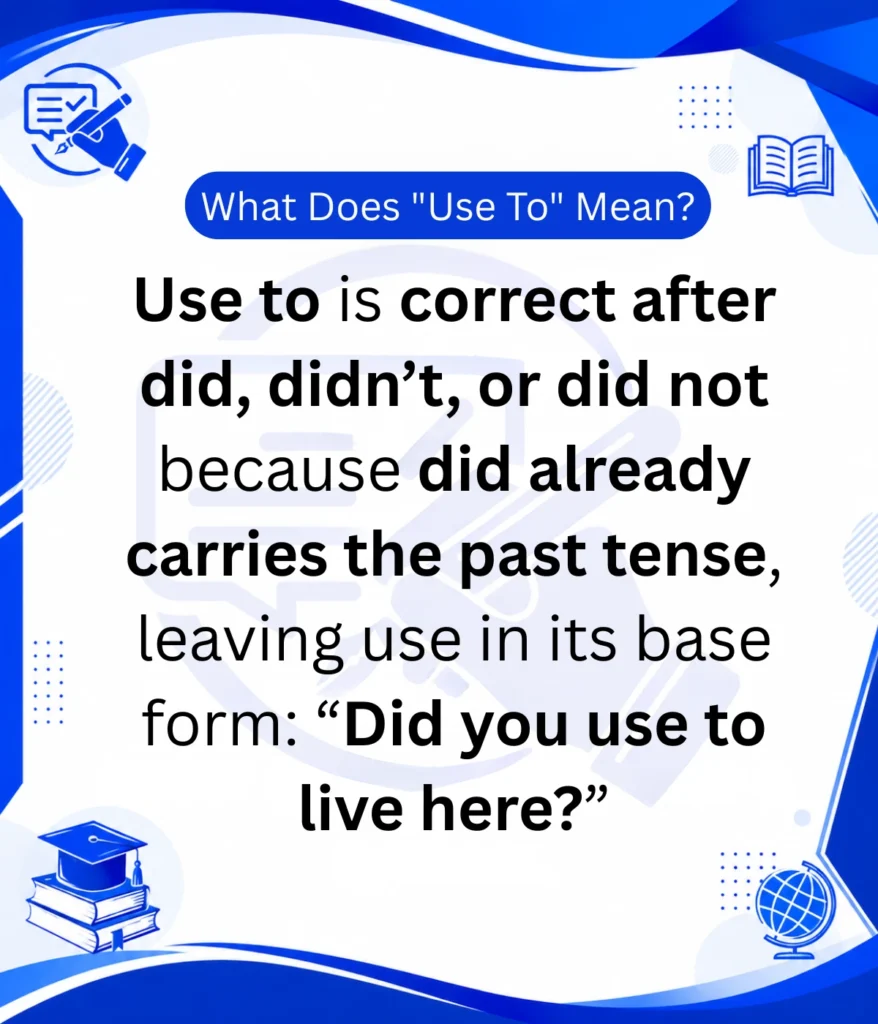
We write use to only when did, didn’t, or did not is in the sentence. The word did already shows the past tense. So the main verb stays in its base form, just like in “Did he go?”
- Did you use to live here?
- She didn’t use to like coffee.
- I did use to run every morning.
Use To as the Verb “Use” Plus an Infinitive
Sometimes use to is just the verb use followed by to and another verb. It has nothing to do with the past here. It means “to make use of something for a purpose.“
A soft cloth is what I use to wipe the screen.
Used To or Use To
| Check | What to look for | Correct form |
|---|---|---|
| Did test | Did, didn’t, or did not is in the sentence | use to |
| Be test | Be or get fits before the phrase | used to |
| No did, past habit | A routine that has ended | used to |
Why Used To and Use To Sound Alike
When we say used to out loud, the d and the t blend into one sound. Our ears hear “yoo-sta.” That is why many people write use to by mistake.
The same thing happens with supposed to and suppose to. Writing is where the d matters.
Used To vs Use To in Real Sentences
Didn’t use to is correct, but it can sound stiff. A simple fix is to use the simple past instead. This keeps the meaning and reads smoothly.
- Stiff: He didn’t use to eat vegetables.
- Smooth: He didn’t eat vegetables back then.
More Posts:On to vs Onto – Meaning, Differences & Usage
FAQs About Used to vs Use To
Is it “I used to” or “I use to”?
It is I used to. “I use to” is never correct for a past habit.
Is it “did you use to” or “did you used to”?
It is did you use to. The word did already carries the past tense, so the d drops.
What does “get used to” mean?
Get used to means become accustomed to something. It shows the process of getting comfortable.
Is “used to be” or “use to be” correct?
It is used to be. Use use to be only after did, as in “Didn’t it use to be here?”
Do British and American writers treat “didn’t use to” differently?
Both follow the same core rule. Some British writing uses didn’t used to informally, but standard guides prefer didn’t use to.
Conclusion
Use used to by default for past habits and for be/get used to. Switch to use to only after did, didn’t, or did not. Run the did test and you will get it right every time.

Hi, I’m John Henry, the voice behind Grammar Nudge. I make grammar simple and easy to understand, from basic rules to advanced writing tips. Clear explanations. Practical examples. No confusion.
Related Posts