Ate is the simple past of eat. Eaten is the past participle, and it needs a helper verb like have, has, or had. So we say “I ate lunch,” but “I have eaten lunch.”
This guide on ate vs eaten gives you the rule, a few quick tests, and some practice.
Ate – The Simple Past of Eat
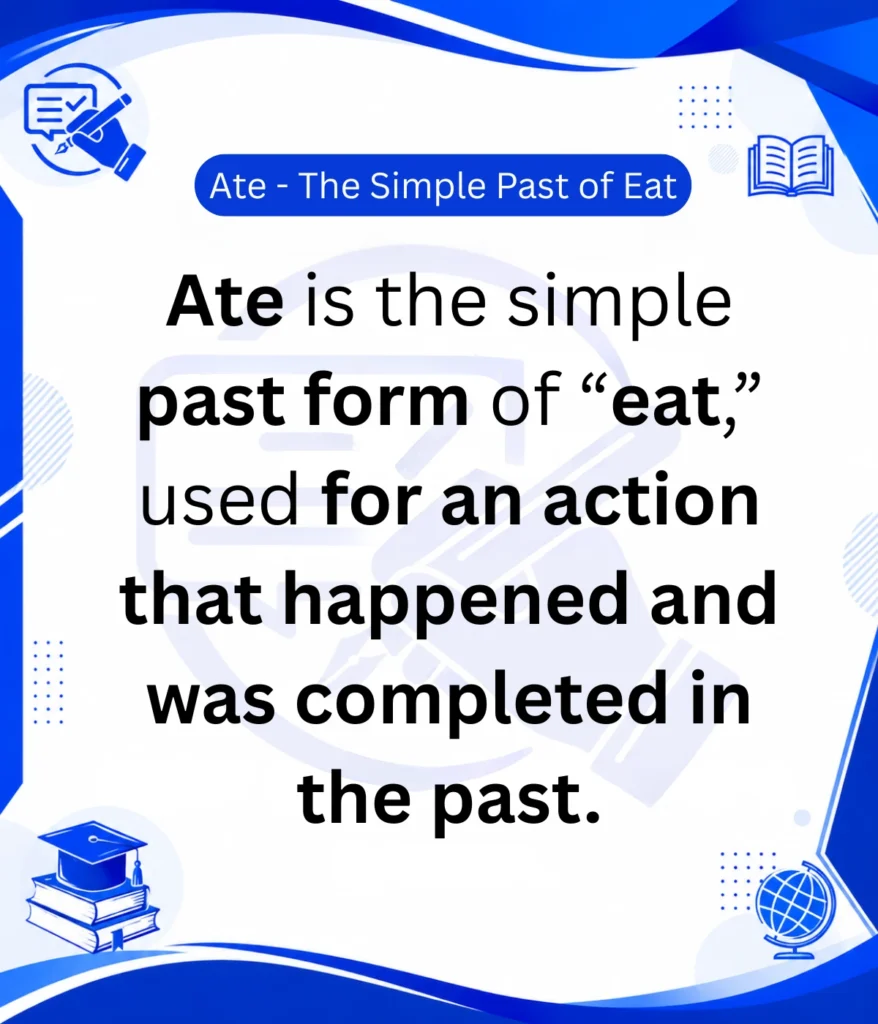
When “Ate” Stands on Its Own
Use ate for an action that started and ended in the past. It works alone, with no helper verb.
- I ate breakfast at 7 a.m.
- She ate pizza last night.
- They ate before the movie.
Time words like yesterday, ago, and last week often point to ate.
Why “Ate” Never Follows Have, Has or Had
Helper verbs like have need a past participle. The past participle of eat is eaten, not ate.
That is why “I have ate” is wrong. Say “I have eaten.” The same goes for “she had ate,” which should be “she had eaten.”
More Posts:Verb vs Adjective – Meaning, Differences & Usage
Eaten – The Past Participle of Eat
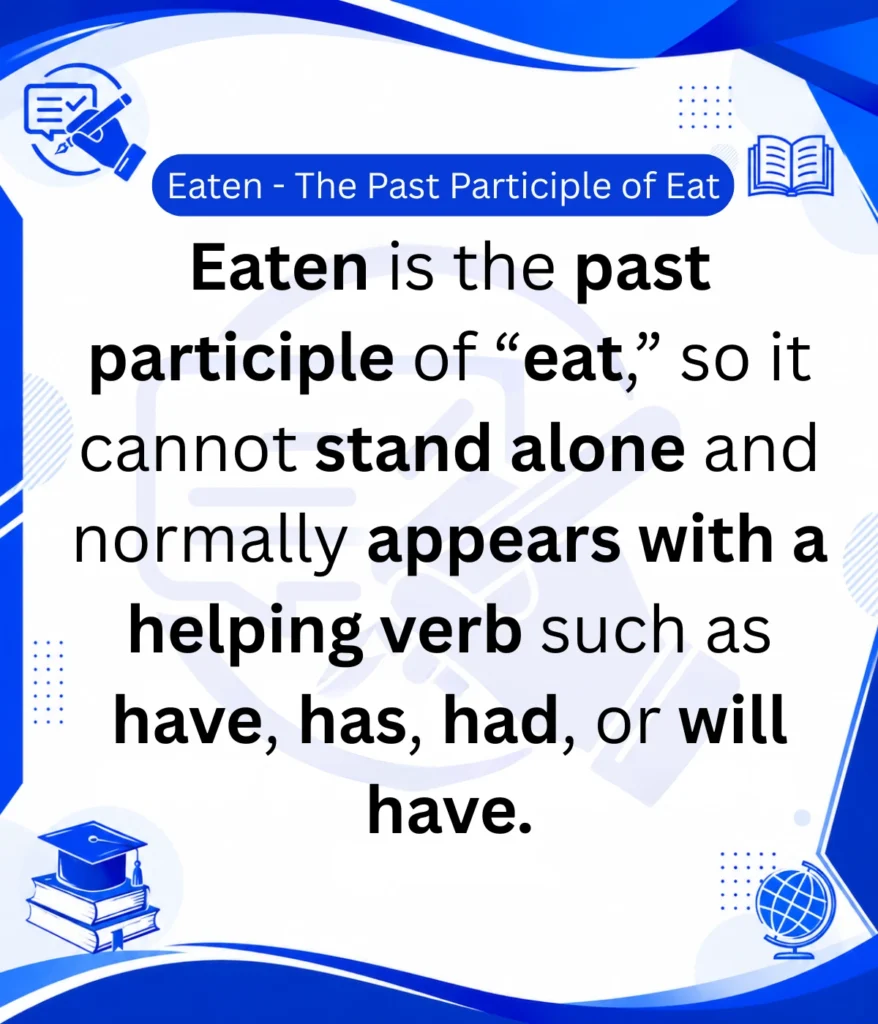
Eaten With Have, Has, Had and Will Have
Eaten shows up in the perfect tenses. These tenses link an action to another point in time.
- Present perfect: I have eaten already.
- Past perfect: She had eaten before we arrived.
- Future perfect: By six, we will have eaten.
Eaten cannot stand alone. “I eaten lunch” is always incorrect.
Eaten in Passive Sentences
In the passive voice, the focus moves to what received the action. Use a form of be plus eaten.
- The cake was eaten in minutes.
- All the snacks have been eaten.
News reports use this form often, since the action matters more than who did it.
Eaten vs Ate: How to Choose the Right One
Look at the word just before the verb. If it is have, has, had, will have, or a form of be, choose eaten. If there is no helper, choose ate.
Eat is an irregular verb, so it does not take -ed. It follows the same pattern as give, gave, given and write, wrote, written. The -en ending traces back to the Old English word eten.
“Have You Eaten?” or “Did You Eat?”
Both are correct, but they ask slightly different things. “Have you eaten?” checks the present. It means “Are you full now?”
“Did you eat?” points to a past moment, as in “Did you eat at noon?”
Ate or Eaten at a Glance
| Form | Pattern | Example | Meaning |
|---|---|---|---|
| ate | simple past | I ate lunch. | Finished past action |
| have/has eaten | present perfect | I have eaten. | Done, and it matters now |
| had eaten | past perfect | I had eaten before he came. | Happened earlier in the past |
| will have eaten | future perfect | I will have eaten by six. | Done before a future time |
| was/were eaten | passive | The food was eaten. | Action received |
More Posts:Begin vs Began vs Begun – Meaning, Differences & Usage
FAQs About Ate vs Eaten
What is the main difference between “ate” and “eaten”?
Ate is the simple past and stands alone. Eaten is the past participle and needs a helper verb like have, has, had, or be.
Can I say “I have ate”?
No. After have, use the past participle. The correct sentence is “I have eaten.”
When should I use “I ate” instead of “I have eaten”?
Use “I ate” when the action happened at a clear time in the past, like last night. Use “I have eaten” when the result matters now.
Why do people often say “I ate already”?
It is short and casual, and it is common in everyday speech. British English leans more toward “I’ve already eaten.”
Can “eaten” be used without “have” or “had”?
Only in passive sentences, where a form of be helps it, as in “The food was eaten.” On its own, eaten is incorrect.
Which is correct: “The food was ate” or “The food was eaten”?
“The food was eaten” is correct. Passive voice always uses the past participle.
Is it “Have you ate?” or “Have you eaten?”
The correct question is “Have you eaten?” The helper verb have requires the past participle.
What is the easiest way to remember ate vs eaten?
Check for a helper verb. No helper means ate. A helper means eaten.
Conclusion
The rule behind ate vs eaten is simple. Use ate for a finished past action, and use eaten after a helper verb. Run the helper verb test, and you will pick the right form every time.

Hi, I’m John Henry, the voice behind Grammar Nudge. I make grammar simple and easy to understand, from basic rules to advanced writing tips. Clear explanations. Practical examples. No confusion.
Related Posts