
Time slot (two words) is the standard, dictionary-recognized spelling. Timeslot (one word) shows up often in casual and digital writing, but it isn’t yet listed as standard in major dictionaries.
Below, we break down when to use each form, what they mean, and how to stay consistent in your own writing.
Why This Mix-Up Happens
English compound words often start as two words, move to hyphenated, then finally merge into one word over time. Time slot is still in that middle stage. This is the same path words like “email” and “website” once followed.
Because both forms look natural, writers often use them interchangeably without realizing there’s a preferred spelling for formal writing.
What Does Time Slot Mean?
Definition and Part of Speech
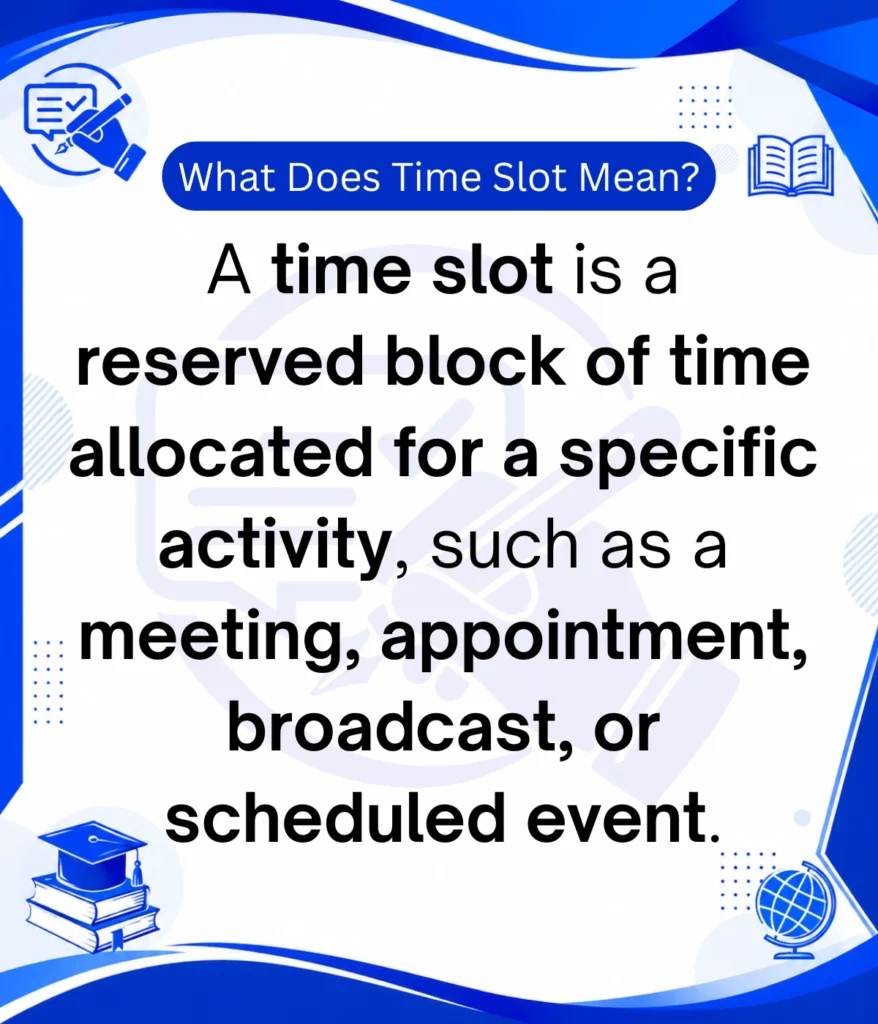
Time slot is a noun. It refers to a specific, allocated block of time set aside for an activity, meeting, appointment, or broadcast. Think of it as a reserved space on a schedule.
Example Sentences Using Time Slot
- “Can you book a time slot for tomorrow at 3 PM?”
- “The news airs in the 6 PM time slot.”
- “Each patient gets a 30-minute time slot with the doctor.”
More Posts:Recurring vs Reoccurring – Meaning, Differences & Usage
What Does Timeslot Mean?
Is Timeslot a Real Word?
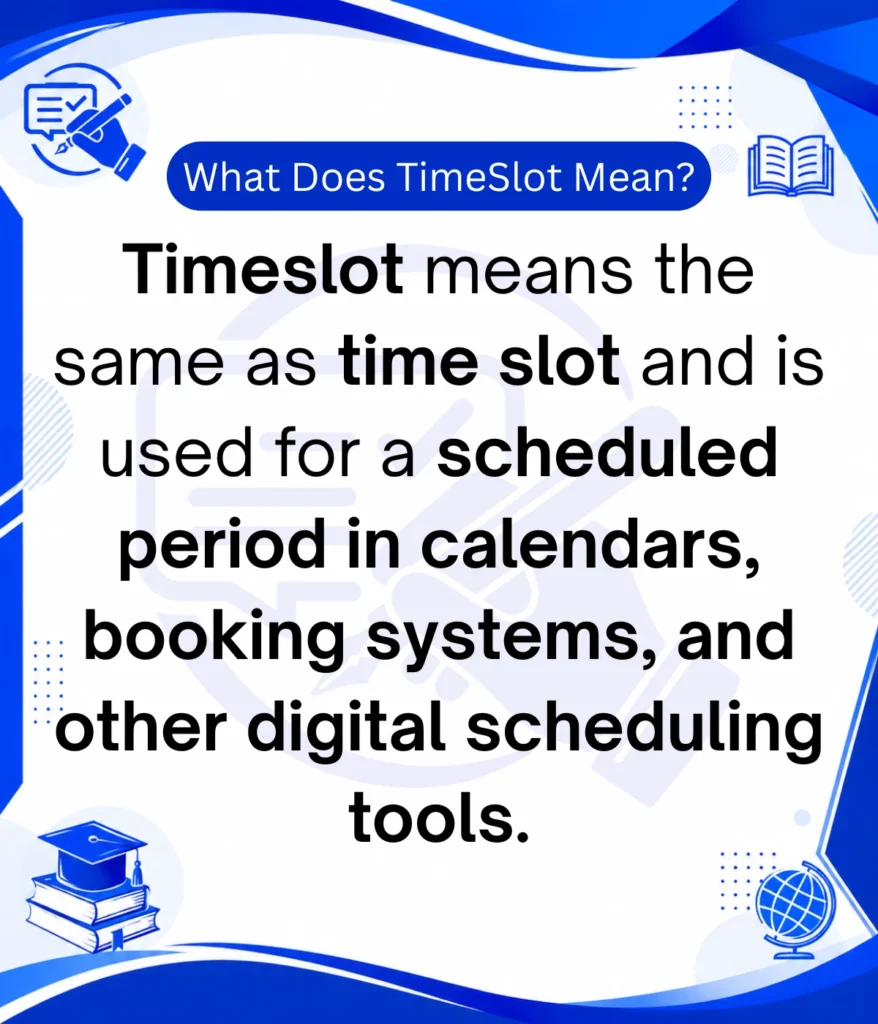
Timeslot carries the exact same meaning as time slot. It’s a closed-compound version that’s gained popularity in tech products, scheduling apps, and casual online writing. Merriam-Webster and most style guides still list time slot as the primary form.
Example Sentences Using Timeslot
- “Select your preferred timeslot from the calendar app.”
- “The booking system shows every available timeslot in green.”
More Posts:Astronomy vs Astrology – Meaning, Differences & Usage
Time Slot vs Timeslot – Key Differences
| Feature | Time Slot | Timeslot |
|---|---|---|
| Word count | Two words | One word |
| Dictionary status | Standard, widely recognized | Informal, not standard yet |
| Best used in | Formal writing, business, journalism | Casual writing, app UI, tech copy |
| Common context | Emails, official documents | Software, scheduling tools |
When to Use Time Slot or Timeslot in Professional Writing
In Emails, Scheduling Tools, and Business Communication
If you’re writing a resume, client email, or company document, stick with time slot. It reads as more polished and matches what most style guides recommend.
If you’re building an app or writing UI copy, timeslot can work fine, especially since many scheduling platforms already use it.
Consistency Tip for Writers and Teams
Pick one form and use it throughout your entire document. Switching between time slot and timeslot in the same piece of writing looks inconsistent and can distract readers.
Common Mistakes With Time Slot vs Timeslot
Mixing Both Forms in the Same Document
This is the most frequent error. A single webpage or email using both spellings signals a lack of proofreading. Choose one and stay consistent.
Confusing It With Similar Compounds
Some writers mix up time slot with time frame. A time frame refers to a period or duration (like “within a three-week time frame”), while a time slot refers to a specific reserved point in a schedule.
More Posts:Alright vs All Right – Meaning, Differences & Usage
FAQs About Time Slot vs Timeslot
Is it “time slot” or “timeslot”?
Both are used, but time slot (two words) is the standard spelling recognized by major dictionaries.
Which spelling does Merriam-Webster recognize?
Merriam-Webster lists time slot as the standard entry; timeslot is not yet a formal dictionary listing.
Can I use “timeslot” in formal or academic writing?
It’s better to use time slot in formal or academic writing, since it’s the widely accepted standard form.
What’s the difference between “time slot” and “time frame”?
A time slot is a specific reserved point on a schedule; a time frame is a broader span or duration of time.
Is “time-slot” (hyphenated) ever correct?
The hyphenated form is rarely used and isn’t standard; stick with time slot as two separate words instead.
Conclusion
Time slot is the correct, standard spelling to use in most writing, especially formal or professional content. Timeslot isn’t wrong, but it’s better suited for casual or digital contexts like apps and software. When in doubt, choose time slot and stay consistent throughout your writing.

Hi, I’m John Henry, the voice behind Grammar Nudge. I make grammar simple and easy to understand, from basic rules to advanced writing tips. Clear explanations. Practical examples. No confusion.
Related Posts