Wonder means to feel curious, amazed, or unsure about something. Wander means to move around with no fixed direction. One lives in your mind. The other lives in your feet. That’s the simplest way to tell wonder vs wander apart.
These two words look almost the same. Only one letter separates them. But that single letter changes the entire meaning of a sentence.
What Does Wonder Mean?
Wonder is a word about thinking, not moving. It shows up when someone feels curious, doubtful, or filled with awe.
Wonder as a Verb
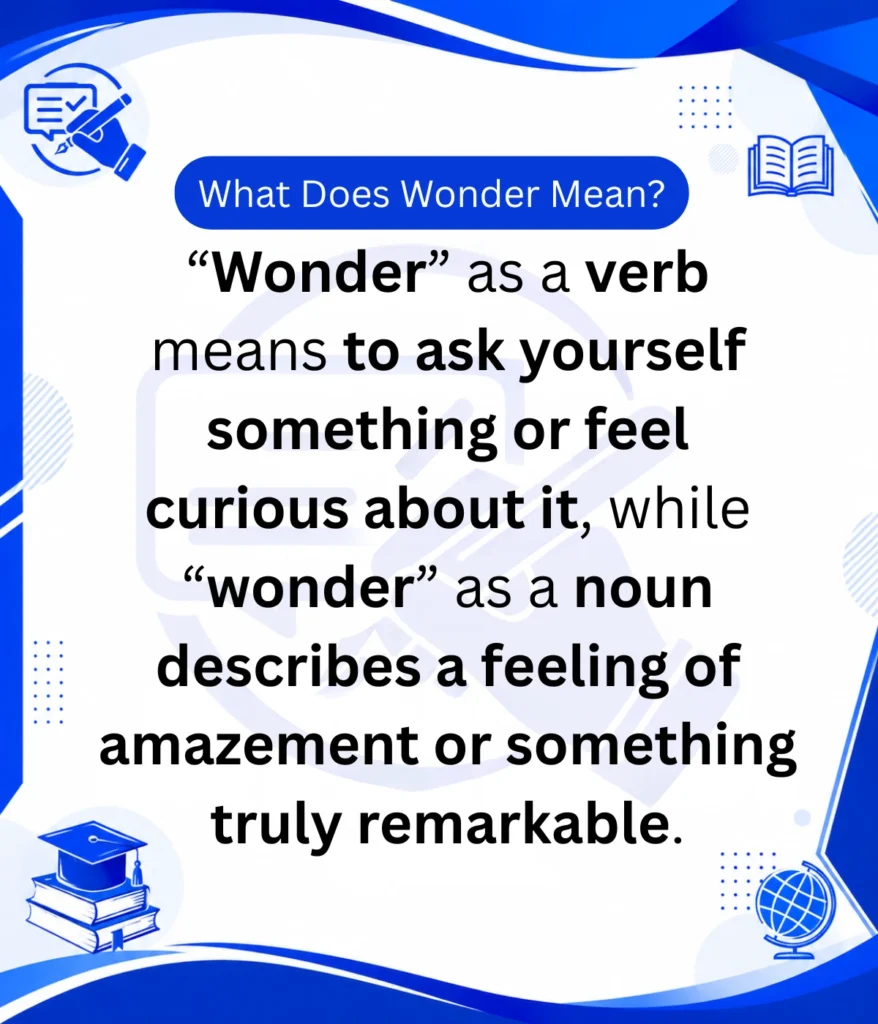
As a verb, wonder means to ask yourself something or feel curious about it. “I wonder why the sky turns orange at sunset.” No physical action happens here. Only thought.
Wonder as a Noun
Wonder also works as a noun. It describes a feeling of amazement or something truly remarkable. “The Grand Canyon is a natural wonder.” This noun form gives the word more flexibility than its twin, wander.
Example Sentences Using Wonder
- I wonder if it will rain tomorrow.
- She looked at the stars in wonder.
- We wondered what happened to the missing package.
What Does Wander Mean?
Wander is all about movement. It describes moving without a clear goal or destination.
Wander as a Verb
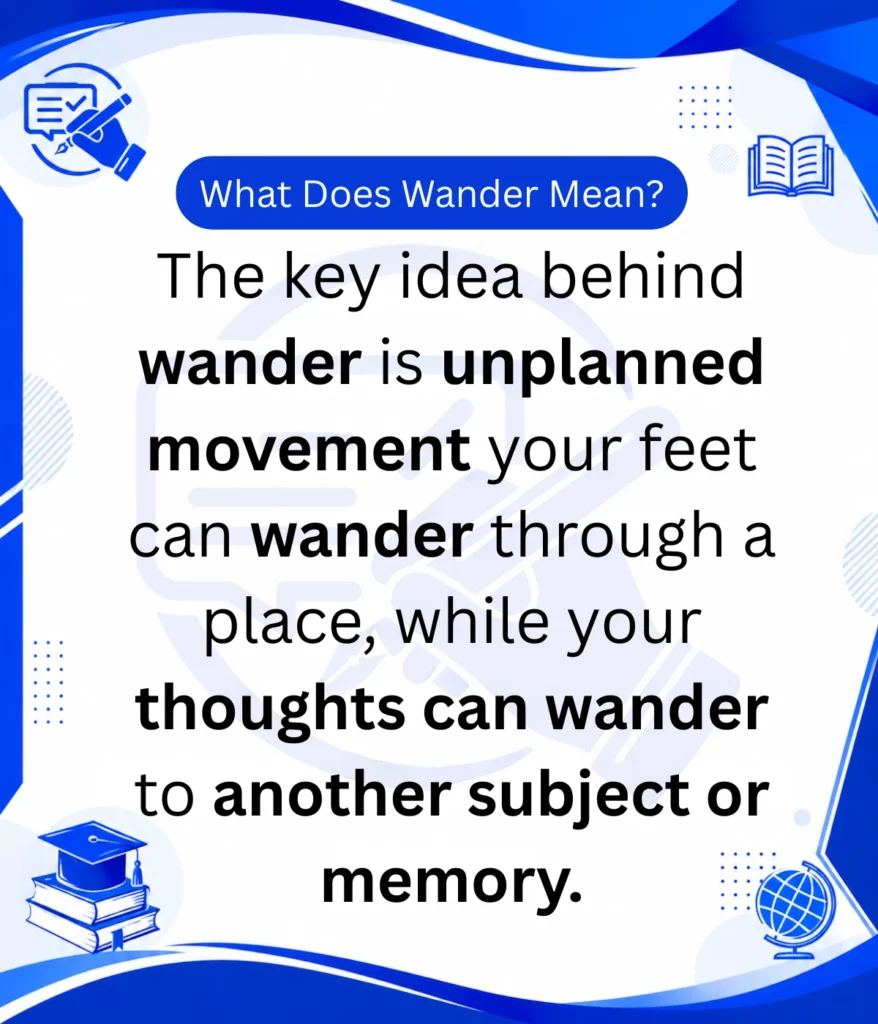
To wander means to roam, drift, or stroll with no plan. “He wandered through the old town for hours.” The feet are moving. The direction is not fixed.
Figurative Uses of Wander
Wander doesn’t always mean physical movement. Your attention or mind can wander too. “My mind tends to wander during long meetings.” This figurative sense is common in everyday speech.
Example Sentences Using Wander
- The kids love to wander around the park.
- Her thoughts wandered back to childhood memories.
- Don’t let your dog wander off the trail.
More Posts:Traveling vs Travelling – Meaning, Differences & Usage
Wonder vs Wander
| Feature | Wonder | Wander |
|---|---|---|
| Meaning | Curiosity, doubt, amazement | Moving with no direction |
| Part of speech | Verb and noun | Mostly verb |
| Activity type | Mental | Physical (sometimes figurative) |
| Pronunciation | /ˈwʌndər/ (short “u”) | /ˈwɑːndər/ (longer “a”) |
Wonder connects to your thoughts. Wander connects to your feet or your focus. Keep that distinction in mind and you’ll rarely mix them up again.
Wonder vs Wander Pronunciation
Since these words look nearly identical, people often mishear them in fast speech.
Wonder uses a short “uh” sound, like in the word “hunter.” Wander uses a longer “ah” sound, like in the word “father.” That small vowel shift is often the only audible clue separating them in conversation.
This is one reason so many people confuse wonder and wander — they sound close enough to blur together when spoken quickly.
How to Remember Wonder vs Wander
A simple memory trick makes this permanent: Wonder = Mind. Wander = Motion.
Try this quick test. Does your sentence include why, how, what, or whether? Use wonder. Does it include through, around, or across? Use wander.
- Wonder pairs with question words.
- Wander pairs with direction words.
This trigger-word pattern works almost every time you’re unsure which word fits.
More Posts:Die vs Dice – Meaning, Differences & Usage
FAQs About Wonder vs Wander
Is wonder a noun or a verb?
Wonder works as both. As a verb it means to feel curious; as a noun it means a feeling of amazement or a remarkable thing.
Can wander be used as a noun?
Rarely. Wander is almost always a verb; the noun form “wandering” is used instead when needed.
What’s the difference in pronunciation between wonder and wander?
Wonder has a short “uh” sound; wander has a longer “ah” sound, similar to “father.”
Is “I wonder around the city” correct?
No. That sentence describes movement, so it should read “I wander around the city.”
Do wonder and wander share the same origin?
No. They come from separate Old English roots — wunder for wonder and wandrian for wander — and this holds true whether you’re using British or American spelling conventions.
Which word fits “letting my mind drift”?
Wander fits best, since drifting thoughts describe motion, not curiosity.
Final Thoughts
Wonder lives in your mind. Wander lives in your movement. Once you connect each word to its true meaning, the confusion disappears for good. Use wonder for curiosity and wander for motion, and your writing will stay clear every time.

Hi, I’m John Henry, the voice behind Grammar Nudge. I make grammar simple and easy to understand, from basic rules to advanced writing tips. Clear explanations. Practical examples. No confusion.
Related Posts