Respond is a verb that means to reply or react. Response is a noun that names the reply or reaction itself. If someone is doing something, use respond. If you are naming a thing, use response.
That one rule solves almost every mix-up between these two words.
What Does Respond Mean?
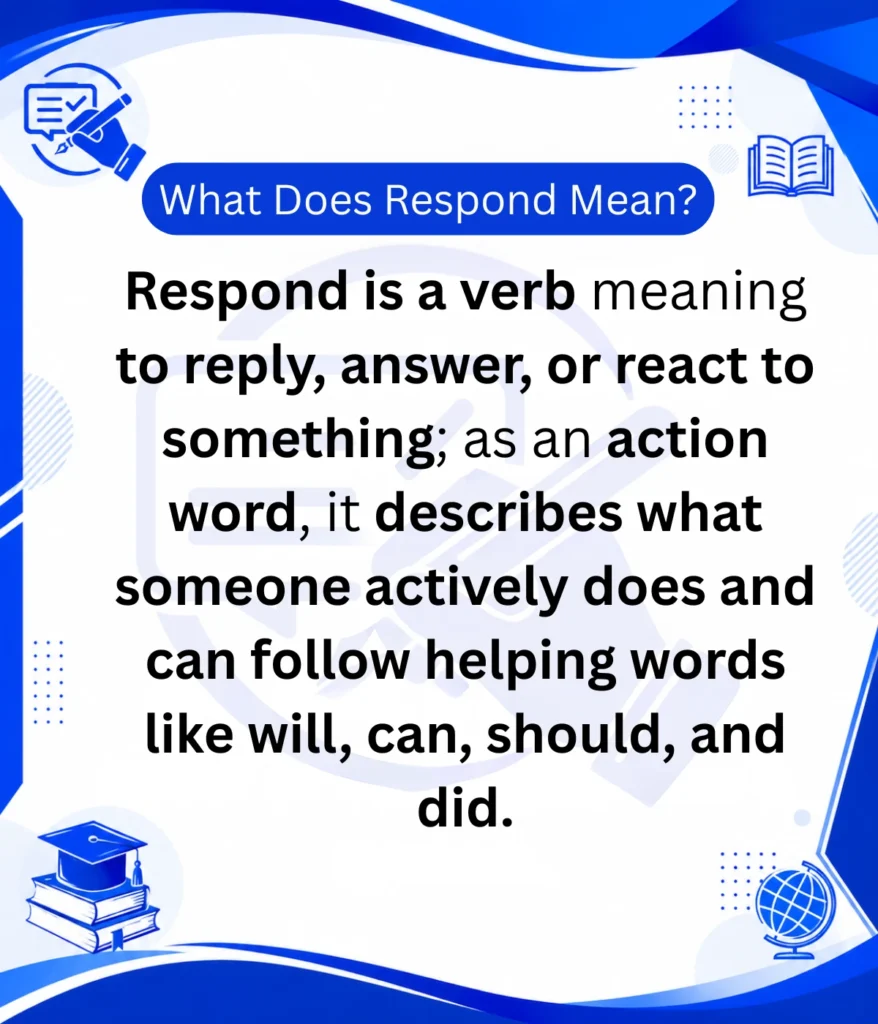
Respond is an action word. It tells us that someone is replying, answering, or reacting to something. This word changes form depending on the tense — respond, responds, responded, responding.
You’ll see it most often followed by the word “to.” A person responds to an email, a question, or a request. The focus stays on what someone is actively doing.
Respond as a Verb (Action Word)
Because respond is a verb, it fits into sentence spots where an action happens. It can follow helping words like will, can, should, or did.
- She will respond tomorrow.
- He didn’t respond to my text.
- Please respond as soon as possible.
More Posts:Wasn’t vs Weren’t – Meaning, Differences & Usage
What Does Response Mean?
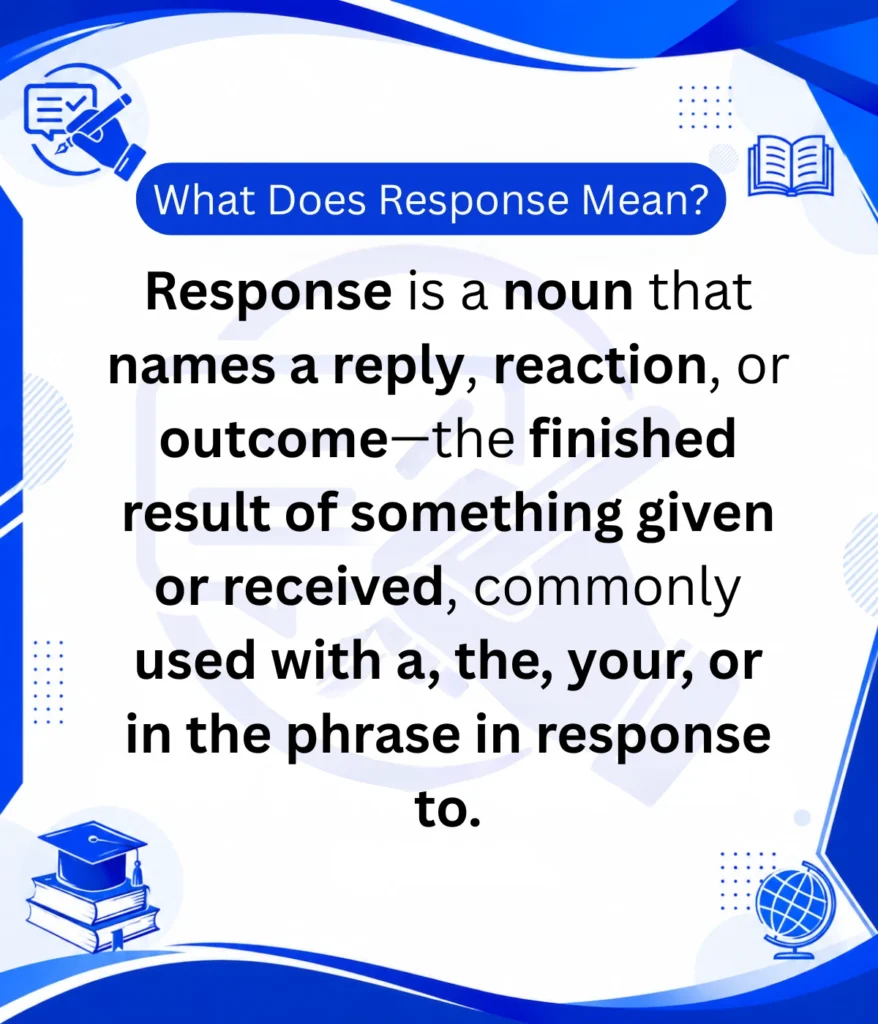
Response is a noun. It names the reply, reaction, or outcome — not the act of giving it. You’ll often find it sitting right after words like a, the, your, or in response to.
A survey collects responses. A doctor watches a patient’s response to treatment. A teacher reads a student’s written response. In every case, the word points to a finished result.
Response as a Noun (Result Word)
Response can be singular or plural, and it often pairs with descriptive words like quick, positive, or emotional.
- Her response was thoughtful.
- We got a fast response from the team.
- The responses were mostly positive.
More Posts:People Do or People Does – Meaning, Differences & Usage
Respond vs Response: The Key Difference
The simplest way to tell these words apart is to ask one question: is this an action, or a result?
Respond equals doing. Response equals the thing produced.
| Feature | Respond | Response |
|---|---|---|
| Part of speech | Verb | Noun |
| Meaning | To reply or react | The reply itself |
| Focus | Action | Outcome |
| Example | Please respond soon. | Thanks for your response. |
How to Use Respond Correctly in a Sentence
Since respond is a verb, it needs a subject performing the action, and it almost always pairs with “to” before naming what’s being replied to.
Skipping that “to” is one of the most common slip-ups English learners make with this word.
Common Sentence Patterns with Respond
- Subject + respond + to + object: They didn’t respond to the offer.
- Subject + will respond: We will respond by Friday.
- Subject + respond + adverb: He responded politely.
How to Use Response Correctly in a Sentence
Response works as a noun, so it slots into spots reserved for people, places, and things — after articles, adjectives, or possessives.
Common Sentence Patterns with Response
- The + response + was + adjective: The response was overwhelming.
- Adjective + response: A quick response solved the issue.
- In response to + noun: In response to the delay, they apologized.
FAQs About Respond vs Response
What is the main difference between respond and response?
Respond is a verb meaning to reply or react. Response is a noun naming the reply itself.
Is respond a verb or a noun?
Respond is always a verb. It describes the act of replying, answering, or reacting to something.
Is response a verb or a noun?
Response is always a noun. It names the reply, answer, or reaction that was given.
Is it correct to say “waiting for your response” or “waiting for your respond”?
“Waiting for your response” is correct, since response is the noun form that follows a possessive word.
Can response be used as a verb?
No. Response cannot function as a verb in standard English. Use respond whenever an action is needed.
Is “respond back” correct English?
Not quite. “Respond back” is redundant, since respond already means to reply back on its own. One British-English habit worth noting: some UK writers still use “reply back” the same way, but standard usage simply says respond.
Final Thoughts
Getting respond vs response right comes down to one simple test: action or result. Use respond when someone is doing the replying. Use response when you’re naming what was given back. Keep that rule in mind, and this mix-up won’t trip you up again.

Hi, I’m John Henry, the voice behind Grammar Nudge. I make grammar simple and easy to understand, from basic rules to advanced writing tips. Clear explanations. Practical examples. No confusion.
Related Posts