Dreamed and dreamt are both correct. They mean the exact same thing — the past tense of “dream.” Dreamed is the more common spelling today, while dreamt is still widely used and fully accepted.
Pick either one and stay consistent within the same piece of writing.
Is “Dreamt” a Real Word?
Yes. Dreamt is a legitimate, dictionary-recognized spelling. It’s called an irregular verb form because it breaks the usual “-ed” pattern most English verbs follow.
What Does “Dreamed” Mean and When to Use It
Dreamed works in any sentence about sleep visions, hopes, or wishes. It fits formal writing, casual writing, and everything between.
Here are a few examples:
- I dreamed about flying over mountains last night.
- She dreamed of opening her own bakery someday.
- They dreamed of a quieter life by the coast.
Since dreamed is the more widely recognized spelling, it’s a safe default whenever you’re unsure which form to pick.
More Posts:Burned or Burnt – Meaning, Differences & Usage
What Does “Dreamt” Mean and When to Use It
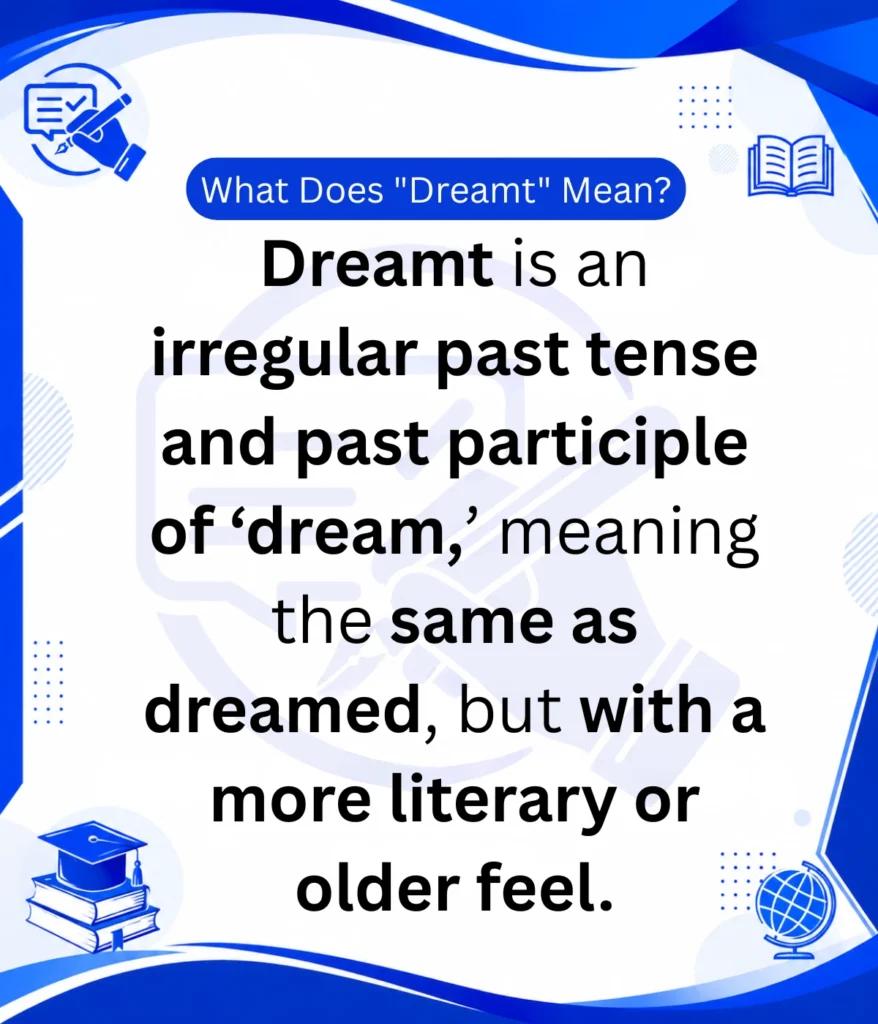
Dreamt carries the same meaning as dreamed — it just has a slightly older, more literary feel. Writers often reach for it in poetry, fiction, or song lyrics.
Here are a few examples:
- I dreamt I was walking through a forest of glass.
- He dreamt about winning the championship.
- We dreamt of building something that would last.
Dreamt tends to show up more in creative or narrative writing, where a softer, older rhythm fits the tone.
Dreamed or Dreamt
| Feature | Dreamed | Dreamt |
|---|---|---|
| Verb type | Regular | Irregular |
| Ending | -ed | -t |
| Common in | Everyday writing, news, business | Fiction, poetry, older texts |
| Meaning | Same | Same |
| Correctness | Fully correct | Fully correct |
Both forms pass spell-check, both appear in dictionaries, and both are grammatically sound choices.
Which One Should You Use?
If you’re writing for work, school, or a general audience, dreamed is the safer, more familiar pick. If you’re going for a literary or reflective tone, dreamt can add character to your sentence.
More Posts:Afterward or Afterwards – Meaning, Differences & Usage
“Dreamed Up” or “Dreamt Up” — The Phrasal Verb
Dreamed up and dreamt up both mean to invent, imagine, or come up with an idea — usually something unusual or unexpected.
- Who dreamed up this brilliant marketing plan?
- She dreamt up a wild story to explain the mess.
This phrase works the same way as the main verb: both spellings are correct, and the choice comes down to personal style.
How to Choose: Dreamed or Dreamt
pick one spelling and stick with it throughout your document. Mixing both in the same piece can look inconsistent, even though each word is correct on its own.
Style guides used by newspapers, businesses, and most style guides tend to favor dreamed for its regular, predictable form. That makes it a solid go-to choice for everyday writing.
FAQs About Dreamed vs. Dreamt
Is “dreamt” British or American?
Dreamt is used in both, but it appears more often in British writing, while dreamed is the more common choice in the United States.
What is the past tense of “dream”?
Both dreamed and dreamt are correct past tense forms of “dream.” They carry identical meaning.
Is “dreamt” grammatically correct?
Yes, dreamt is fully correct and recognized in standard dictionaries as a valid irregular past tense.
Can I use “dreamed” and “dreamt” interchangeably?
Yes, they’re interchangeable in meaning. Just avoid switching between them within the same piece of writing.
Which spelling is more common today?
Dreamed is the more frequently used spelling overall, especially in everyday and professional writing.
Final Thoughts
Dreamed and dreamt both mean the same thing, and both are correct choices. Use dreamed for everyday, professional writing, and reach for dreamt when you want a softer, more literary tone. Whichever you choose, staying consistent is what matters most.

Hi, I’m John Henry, the voice behind Grammar Nudge. I make grammar simple and easy to understand, from basic rules to advanced writing tips. Clear explanations. Practical examples. No confusion.
Related Posts