While is the word to use in almost every sentence you write. Whilst means the same thing, but it’s the older, more formal cousin used mainly in British writing. If you’re unsure which one fits, while is almost always the safe choice.
Now let’s break down exactly why, so you never second-guess this word again.
What Does While Mean?
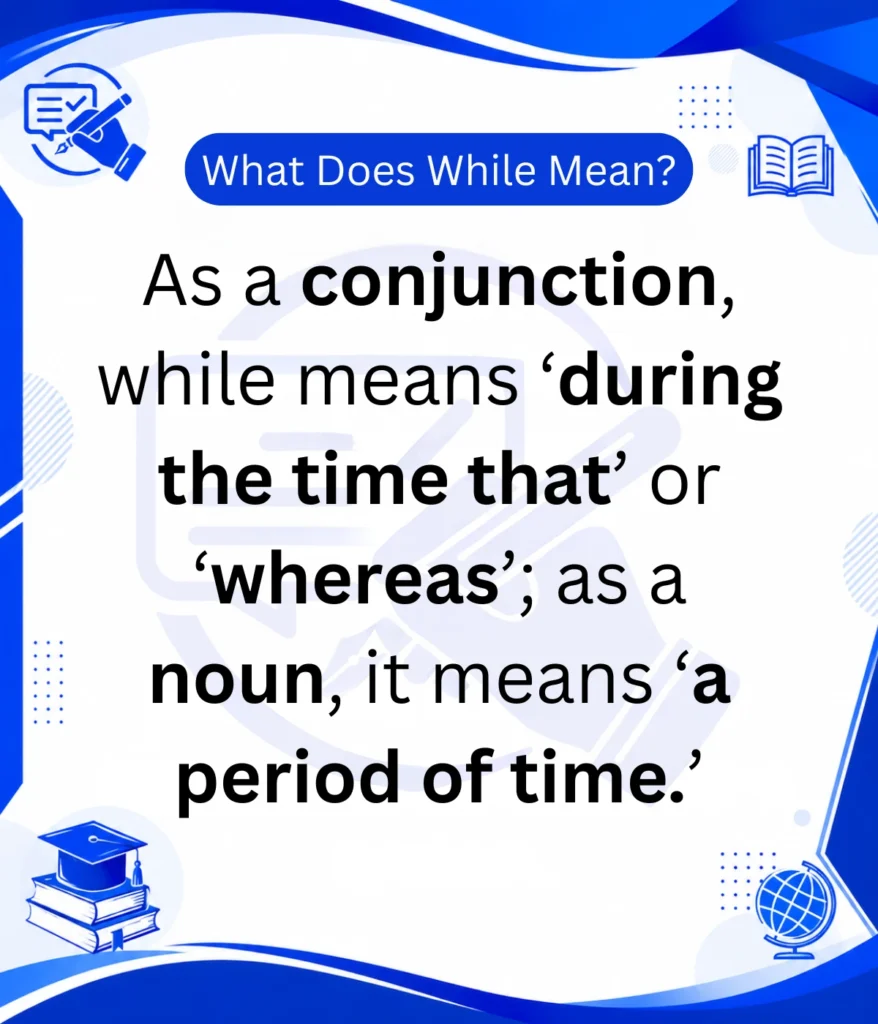
While is one of the most flexible words in English. It can act as a conjunction, a noun, or even a verb, depending on how you use it.
While as a Conjunction (Time and Contrast)
As a conjunction, while connects two actions happening at the same time. It can also show contrast, working like “whereas” or “although.”
Use while to link two events happening together:
- She answered emails while waiting for her coffee.
- While the market dipped, tech stocks kept climbing.
Both uses are correct and extremely common in everyday writing.
While as a Noun and Verb
While also works as a noun, meaning “a period of time.” For example: “We talked for a while.”
As a verb, it means to pass time enjoyably: “They whiled away the afternoon.” This use is rare today but still valid.
Example Sentences with While
- I read a book while my sister cooked dinner.
- He stayed calm while everyone else panicked.
- It takes a while to master a new skill.
More Posts:Burned or Burnt – Meaning, Differences & Usage
What Does Whilst Mean?
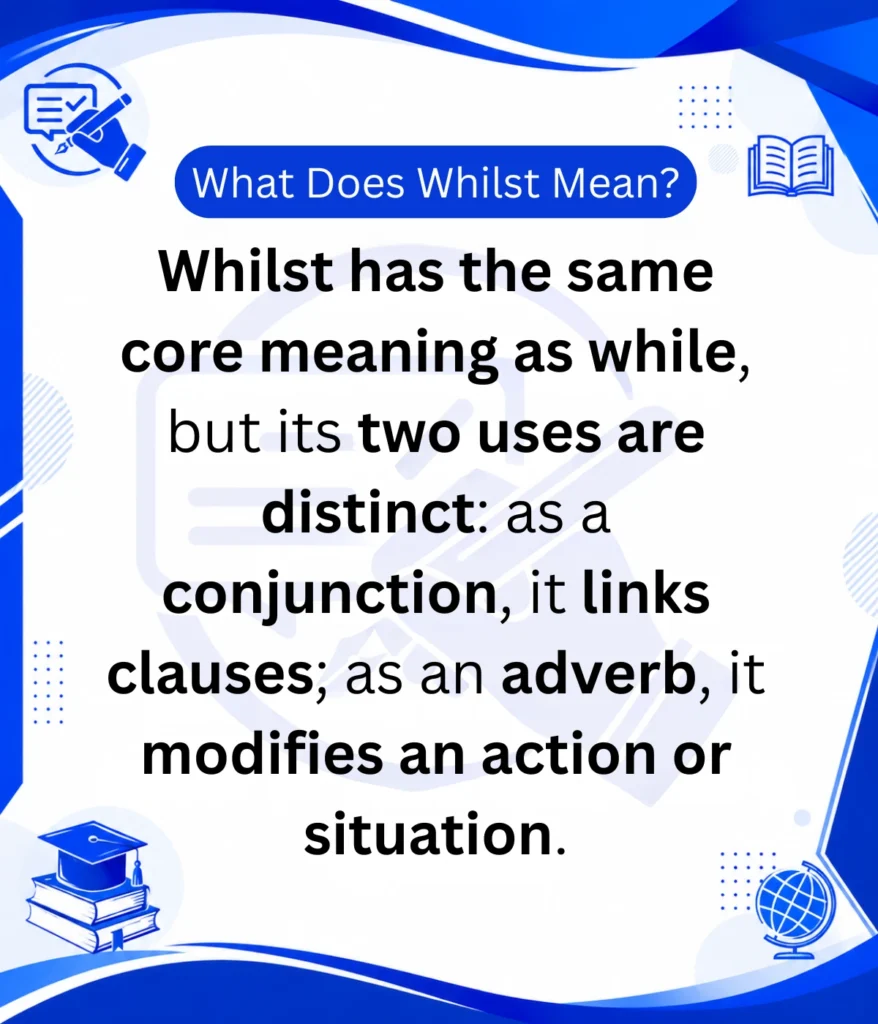
Whilst carries the exact same core meaning as while. It works as a conjunction or adverb, showing time or contrast between two ideas.
The key limit: whilst can never function as a noun or verb. That’s where it splits from while.
Whilst as a Conjunction and Adverb
Whilst connects clauses just like while does:
- Whilst the team debated, the deadline passed.
- He remained calm, whilst his colleagues grew anxious.
Notice the tone here feels slightly more formal and old-fashioned.
Where Whilst Comes From (Origin and Etymology)
Whilst traces back to Middle English, appearing around the 14th century. It formed by adding an old adverbial “-st” ending to while, similar to how “amid” became “amidst.”
Linguists call this an obsolete suffix pattern. It survived in a handful of words but faded from everyday use over centuries.
Example Sentences with Whilst
- Whilst the storm raged, the town lost power.
- She smiled whilst reading his message.
- Whilst I understand your point, I disagree.
More Posts:Burned or Burnt – Meaning, Differences & Usage
While vs Whilst
The grammar gap between these two words is small but important. While does more jobs in a sentence than whilst ever can.
| Feature | While | Whilst |
|---|---|---|
| Conjunction | Yes | Yes |
| Adverb | Yes | Yes |
| Noun | Yes | No |
| Verb | Yes | No |
| Formality | Neutral | Formal |
Regional Usage Patterns
While dominates everyday writing and speech across most English-speaking regions today. Whilst survives mostly in formal or literary British writing, and rarely appears outside it.
Which Should You Use — While or Whilst?
default to while. It works in every context, sounds natural, and never risks looking outdated.
Whilst isn’t wrong, but it can feel stiff or overly formal to modern readers, especially outside literary or academic writing.
Why While Works in Almost Every Situation
While fits casual messages, business reports, academic papers, and creative writing alike. It’s the versatile, no-risk choice that never distracts your reader.
Style guides across journalism and publishing consistently favor while for clarity and flow.
When Whilst Might Still Appear
You may still see whilst in classic literature, formal British publications, or legal-style writing. Outside those contexts, it often reads as unnecessarily fancy.
FAQs About While or Whilst
Is whilst grammatically correct?
Yes, whilst is grammatically correct. It’s simply the more formal, less common version of while.
Is it OK to use whilst in formal writing?
Yes. Whilst fits formal or literary writing well, though while remains the safer, clearer default in standard usage. This formal usage is more common in British English than elsewhere.
Does while and whilst mean the same thing?
Yes, both words share the same meaning when used as conjunctions showing time or contrast.
Which word should I use in professional writing?
Use while. It’s clear, versatile, and understood instantly by every reader.
Is whilst considered old-fashioned?
Many readers view whilst as slightly dated or overly formal compared to the simpler, more natural while.
Final Thoughts
While and whilst share the same meaning, but while is the smarter default for nearly all writing. Save whilst for rare formal or stylistic moments, and you’ll never second-guess this word choice again.

Hi, I’m John Henry, the voice behind Grammar Nudge. I make grammar simple and easy to understand, from basic rules to advanced writing tips. Clear explanations. Practical examples. No confusion.
Related Posts